


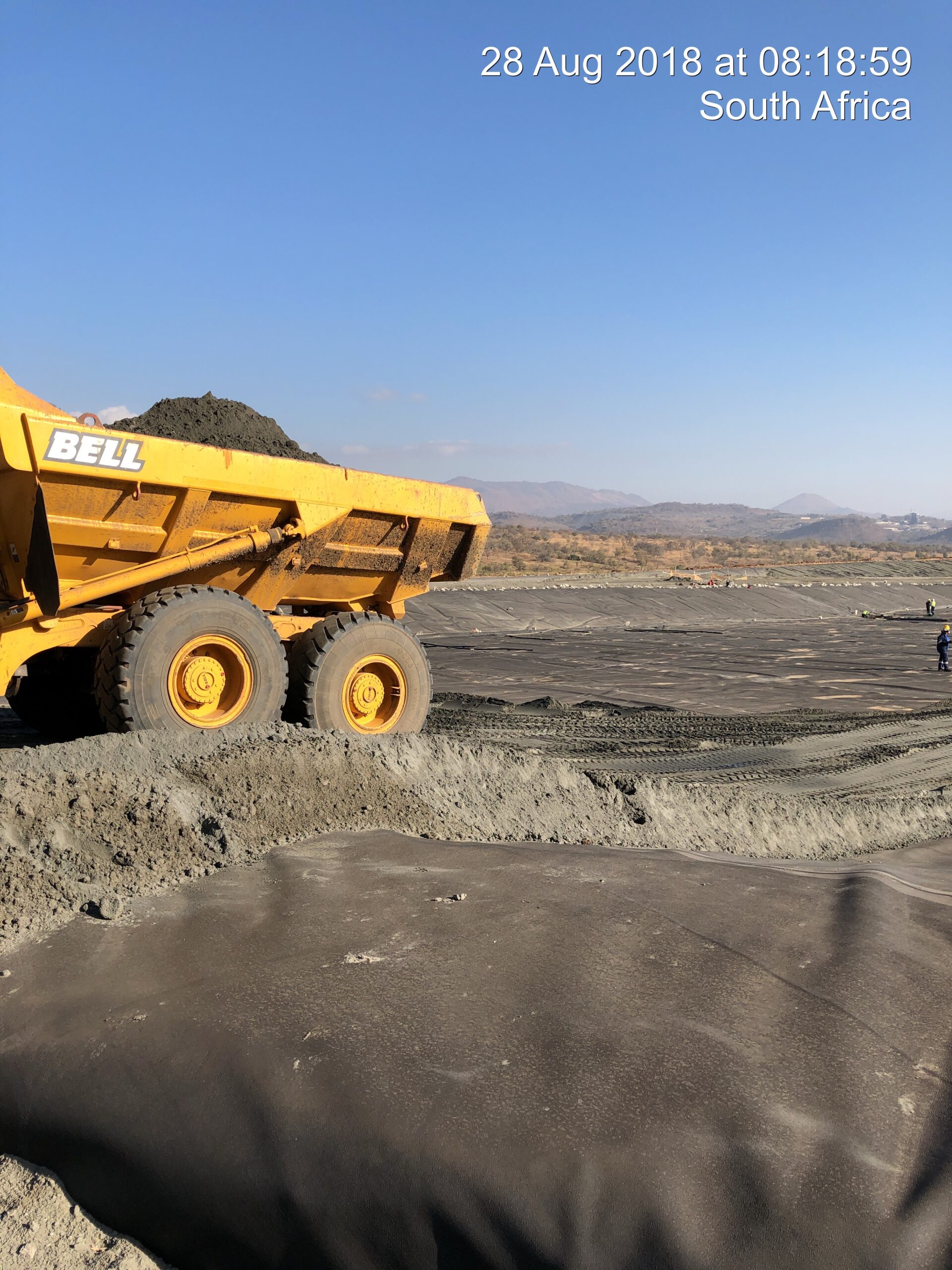
Once considered almost entirely the domain of a specialised branch of civil engineering, the scope of managing tailings storage facilities (TSFs) is now considerably broader and more complex.
According to John Stiff, a partner and principal engineering geologist at SRK Consulting, the Global Industry Standard on Tailings Management (GISTM) has fundamentally shifted the responsibilities of tailings engineers.
“What was once an afterthought is now a departure point,” said Stiff. “The integration of environmental, social and governance (ESG) concerns now requires engineers to collaborate closely with multidisciplinary teams, including ESG professionals.”
This integration extends across the lifecycle of a TSF, from site selection to closure. ESG considerations now need to be addressed from the very beginning of the site selection process, he explained.
“It is not optional anymore,” Stiff said. “This holistic approach ensures that communities and ecosystems affected by mining activities are factored into operational planning from day one.”
Technical aspects
At the same time, the GISTM has also tightened up requirements on the technical aspects of TSF design and management. The geotechnical risks related to these structures are well known, based on the failures that have occurred, he noted.
“Over and above the focus on ESG, the GISTM also considers hydrological risks as well as the geo-environmental risks related to geochemistry and geohydrology,” he explained. “These now all need to be well integrated to build a full understanding of the broader risks associated with each TSF.”
Mitigating these risks to human life and the environment then becomes a key aspect of the TSF design and operational philosophy. One of the steepest learning curves for tailings engineers has been closing knowledge gaps, he argued. Among the challenges of investigating older TSFs, for instance, is incomplete historical records – which can hinder accurate risk assessments.
“Good record-keeping is vital, and the GISTM supports this with its requirement for a constantly updated knowledge base – ensuring that all relevant data is available to inform risk mitigation strategies,” he said.
Material changes
SRK Consulting partner and principal environmental scientist Franciska Lake concurred, highlighting the GISTM’s emphasis on responding to any material change in the various elements of the TSF. Protecting the safety of employees, communities and other stakeholders relies on diligent monitoring of conditions in and around the facility.
“Changes occur constantly over the lifecycle of a TSF, and these need to be carefully monitored to assess their implications and to initiate change management where appropriate,” said Lake. “The standard specifically requires that knowledge about the social, environmental and local economic context of a TSF is updated at least every five years, or whenever there is a material change affecting the TSF or its social, environmental and local economic context, to facilitate ongoing safety and compliance.”
A material change could be influenced by factors such as population migration into areas surrounding a TSF, which would increase the population at risk and therefore the potential consequences of a failure. Conversely, proactive measures taken by mines to comply with GISTM requirements can mitigate risk and thereby enhance TSF safety, effectively lowering the consequence of failure by reducing the extent of the inundation zone.
Early warning
The need to keep careful track of TSF-related changes on an ongoing basis highlights the importance of monitoring – where possible on a real-time or near-real-time basis. Stiff emphasised that early warning systems are particularly indispensable to TSF performance monitoring.
“Identifying likely failure modes – and monitoring for early signs of instability – ensures that the right preventative action can be taken, and communities can be protected,” he noted. “Instrumentation and technology play a vital role here; this facilitates the development of real-time dashboards, for instance, so that accountable executives and emergency response teams can act quickly.”
Technological innovation is also improving quantitative risk assessments, with a shift toward more robust, data-driven measures to cover all aspects of risk,” said Stiff. “This approach not only informs site-specific mitigation strategies but also drives the development of cost-effective remediation techniques.”
He also pointed to advanced techniques being used for site characterisation, including sonic drilling and advanced sampling methods to understand tailings composition and foundation conditions.
Extended monitoring
Kavandren Moodley, principal environmental scientist at SRK Consulting, added that GISTM has significantly enhanced the focus on monitoring efforts, extending beyond the boundaries of mining right areas to include surrounding regions, particularly within the inundation zone. This broader approach ensures a more comprehensive understanding of potential impacts and risks.
“With the GISTM’s focus on mine-affected communities, there is a need to extend the monitoring function into the TSF’s inundation zones,” said Moodley. “This monitoring should be as close to real-time as possible, as material changes can occur rapidly in this zone – with significant implications for risk management and safety.”
With the GISTM framework applying equally to planned and existing TSFs, new structures can mitigate risk through more robust and innovative designs. Stiff pointed out that mining companies raising finance for new developments will also be held to the standard’s higher levels of diligence by financial institutions and investors.
“New TSFs designed under these guidelines will be inherently more robust and resilient to failure,” he explained. “At the same time, resilience is built not just on good design but on operational diligence. It’s about consistently applying the GISTM across all aspects of operations.”
Applying ALARP
Legacy facilities, however, present a range of challenges in the journey to GISTM compliance.
“Older TSFs that were developed under outdated standards can be difficult to retrofit,” explained Stiff. “Nonetheless, mines are required to apply interventions that will bring risk levels ‘as low as reasonably practicable’ (ALARP).”
For the many thousands of TSFs that exist globally, applying ALARP involves understanding what is reasonably practical for each site, which varies significantly based on location, design and operational history. He highlighted that the judicious application of the ALARP principle will add considerable resilience to the safety levels of TSFs – to address growing risks such as climate change.
“Cost and practicality will always be considerations,” he said, ”but with better data and a consistent approach, we can achieve acceptable levels of societal and environmental risk.”
The GISTM is therefore providing a valuable framework within which new and legacy sites can be more effectively future-proofed for generations to come.
