


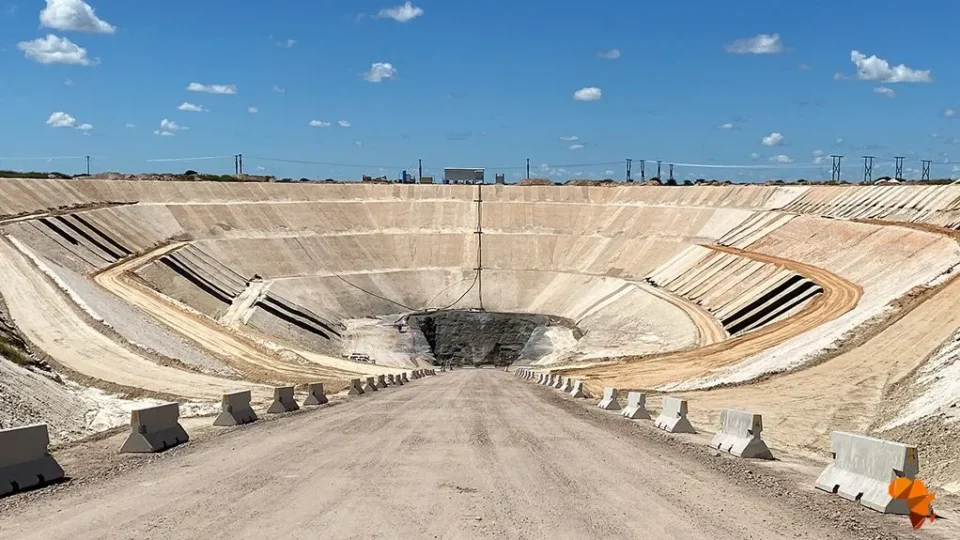
Botswana is moving forward with its mineral beneficiation strategy, announcing plans to explore the establishment of a domestic copper refinery anchored on the expansion of MMG Khoemacau.
Minister of Minerals and Energy Bogolo Kenewendo revealed in Parliament that Khoemacau, in partnership with key stakeholders and in alignment with government policy, will undertake a comprehensive feasibility study into the potential development of a copper refinery or smelter within the country.
Since commencing operations, the Khoemacau Copper Mine has exported approximately 587,000 tonnes of copper concentrate, containing an estimated 177,000 tonnes of copper. Annual exports have averaged around 40,000 tonnes, demonstrating steady production growth and operational stability.
The proposed next phase in Botswana’s copper journey involves moving beyond concentrate exports toward smelting or refining — enabling the country to produce refined copper locally and capture greater value from its mineral resources.
However, the Minister emphasized that refining and smelting operations require significantly higher capital investment, advanced technical expertise, and strong infrastructure compared to concentration. Any such project must therefore be underpinned by a robust and bankable business case.
The upcoming feasibility study will assess critical factors including:
-
Production scale and long-term supply security
-
Infrastructure and logistics requirements
-
Energy availability and cost
-
Market demand outlook
-
Financial and technical viability
Industry benchmarks indicate that sustaining a refinery typically requires national output of between 300,000 and 500,000 tonnes of copper concentrate per year. Botswana is gradually moving toward this threshold, particularly as Khoemacau advances its expansion plans.
At peak expansion, the mine is projected to produce approximately 146,000 tonnes of concentrate annually. Exploration results suggesting a mine life extending beyond 2050 further strengthen the long-term case for downstream processing investment.
Khoemacau currently employs about 3,200 people, including contractors, with workforce numbers expected to rise to approximately 5,500 during expansion. The establishment of a refinery would significantly deepen the economic impact, generating additional employment across engineering, energy, logistics, and support services, while strengthening Botswana’s industrial base.
The planned feasibility study represents a pivotal step in Botswana’s ambition to transition from a primary mineral exporter to a value-added copper producer — reinforcing long-term economic diversification and industrial development.
