
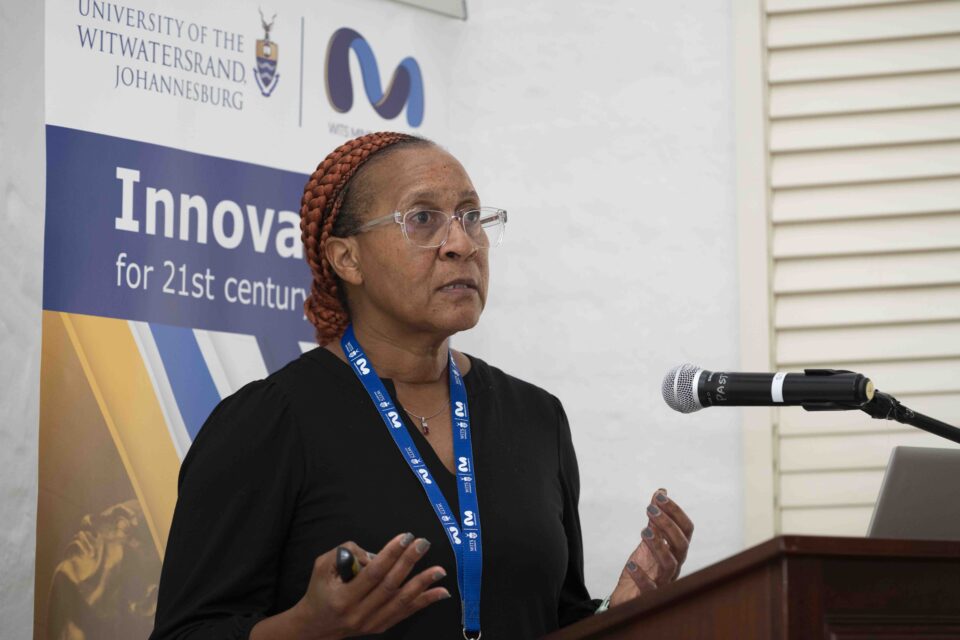
Building on its inaugural May 2026 dialogue, the Wits Mining Institute (WMI) recently convened leaders from academia, government, labour and industry for its second Beyond the Fence event, sponsored by South32. The conversation centred on how workers’ living environments shape their health and safety on the job, placing particular emphasis on the lived realities of women in mining.
“If miners live and move within unsafe, unhealthy, and unstable community environments, how can we expect safe behaviour and optimal safety performance in operations?” asked Dr Pontsho Twala, Adjunct Professor and Director of the WMI.
She said that the answer demands a broader understanding of safety. “While mining has made significant progress in reducing fatalities and injuries, people continue to be killed and injured,” she said.
Safety, she stressed, is a 24/7 reality. “Workers cannot leave their social circumstances at the mine gate,” she said. “Nutrition, living conditions, decent wages, human rights, education and awareness all influence wellbeing and the ability to work safely.”
Twala described these as “invisible risks”. They are social, economic and psychological challenges workers carry into the workplace that conventional Hazard Identification and Risk Assessment processes may not readily capture.
The hidden toll
Lerato Tsele, Deputy Head: Safety and Sustainable Development at the Minerals Council South Africa, underlined the urgency. “A total of 44 lives had already been lost to safety incidents from January to 27 August 2026, the day of the dialogue. This compares with 32 in the corresponding period the previous year,” she said.
For women, she noted, safety must extend beyond personal protective equipment (PPE), machinery and procedures. “Mining was historically designed around a predominantly male workforce. Meaningful inclusion requires the workplace itself to change,” she said.
It must also encompass psychological and sexual safety. Isolated environments, male-dominated workplaces and fear of victimisation can leave women feeling unsafe and discourage reporting.
Tsele highlighted the “invisible loads” women carry through a second shift of childcare, household responsibilities and caring for relatives. “Financial pressures, medical needs, menstruation, antenatal appointments and menopause compound physical and emotional fatigue. This affects sleep, concentration, mental wellbeing, decision-making and risk perception,” she said.
A systems approach to safety
Mabatho Gaula, Unit Manager: Learning Design Hub at Sibanye-Stillwater, offered a systems perspective. “The conventional focus on tasks, equipment, exposure and controls needs to be viewed within a much larger system,” she said.
She identified four interconnected domains. They include the safety operating system; the workforce; the condition or state of workers; and the external environment. “Workers are not passive recipients of safety systems,” she explained. “They actively shape them through decisions and behaviour. Occupation, work arrangements and gender mean two people can experience the same environment differently.”
Gaula advocated connecting indicators such as fatigue, mental health, occupational disease, ergonomics, shift patterns and household responsibilities rather than treating them as isolated data points. “Beyond the mine, healthcare, transport, public services and local economic conditions also influence the environments in which workers live and work,” she explained.
Community drivers of safety
Noleen Dube, Senior Manager: External Affairs for Africa at South32, focused on the human element behind safety systems, noting that mining may have structured processes, clear responsibilities and extensive training, but these ultimately depend on people.
“If there is a human being, where is that human being coming from?” she asked.
Workers can come from environments where safety and security are not guaranteed and risk has become normalised. Poverty, unemployment, difficult gender relationships and unequal power dynamics add further complexity, particularly for women experiencing gender-based violence.
Dube argued that mining’s social investment programmes could be more deliberately aligned with safety objectives. Initiatives that encourage young men to think differently about women, and men’s forums promoting responsible masculinity show how safer workplace cultures can begin within communities.
Tsele also pointed to engineering innovation through Sephiwe Plaatjie, a single mother who became Impala Rustenburg’s first female rock drill operator using hydropower equipment. The lighter, more ergonomic technology reduced vibration and noise, improved drilling efficiency and enabled her to spend more time with her children. “This is one example of how designing mining around people supports meaningful inclusion,” she said.
The evidence for change
Highlighting the role of evidence, North-West University senior lecturer Dr Luce Pretorius noted that a recent study found 31% of mining employees experience moderate to severe psychological distress, with higher levels reported among women.
“While numbers show the scale, they do not explain the external factors driving distress,” she said. Addressing this requires a shared effort: downstream support like financial and legal aid alongside upstream interventions in shift design, fatigue management and facilities.
“Responsibility cannot rest with one stakeholder,” Pretorius said, emphasising that industry, labour, government and academia must collaborate to identify psychosocial risks earlier. “A fence may separate two pieces of physical land, but it can never separate the person,” she concluded.
