


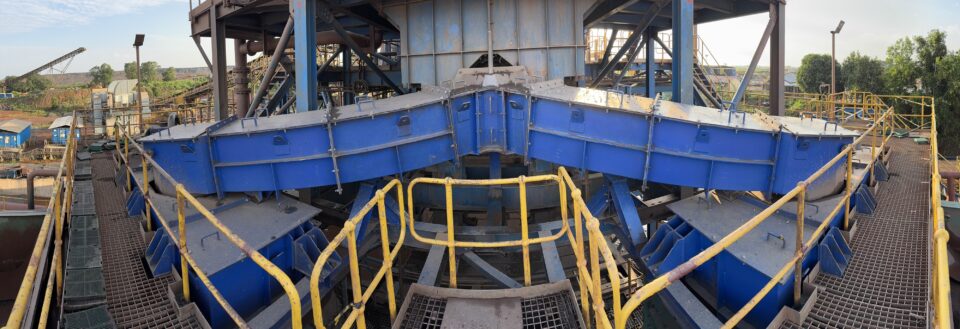
Best known for its work in dry bulk materials handling, Weba Chute Systems has successfully applied its depth of expertise to resolve transfer point challenges in the wet plant of an iron ore mine in Sierra Leone.
According to Dewald Tintinger, Technical Director at Weba Chute Systems, the mine was experiencing chronic screening inefficiencies that were undermining overall plant performance. These issues were traced directly back to poor chute design.
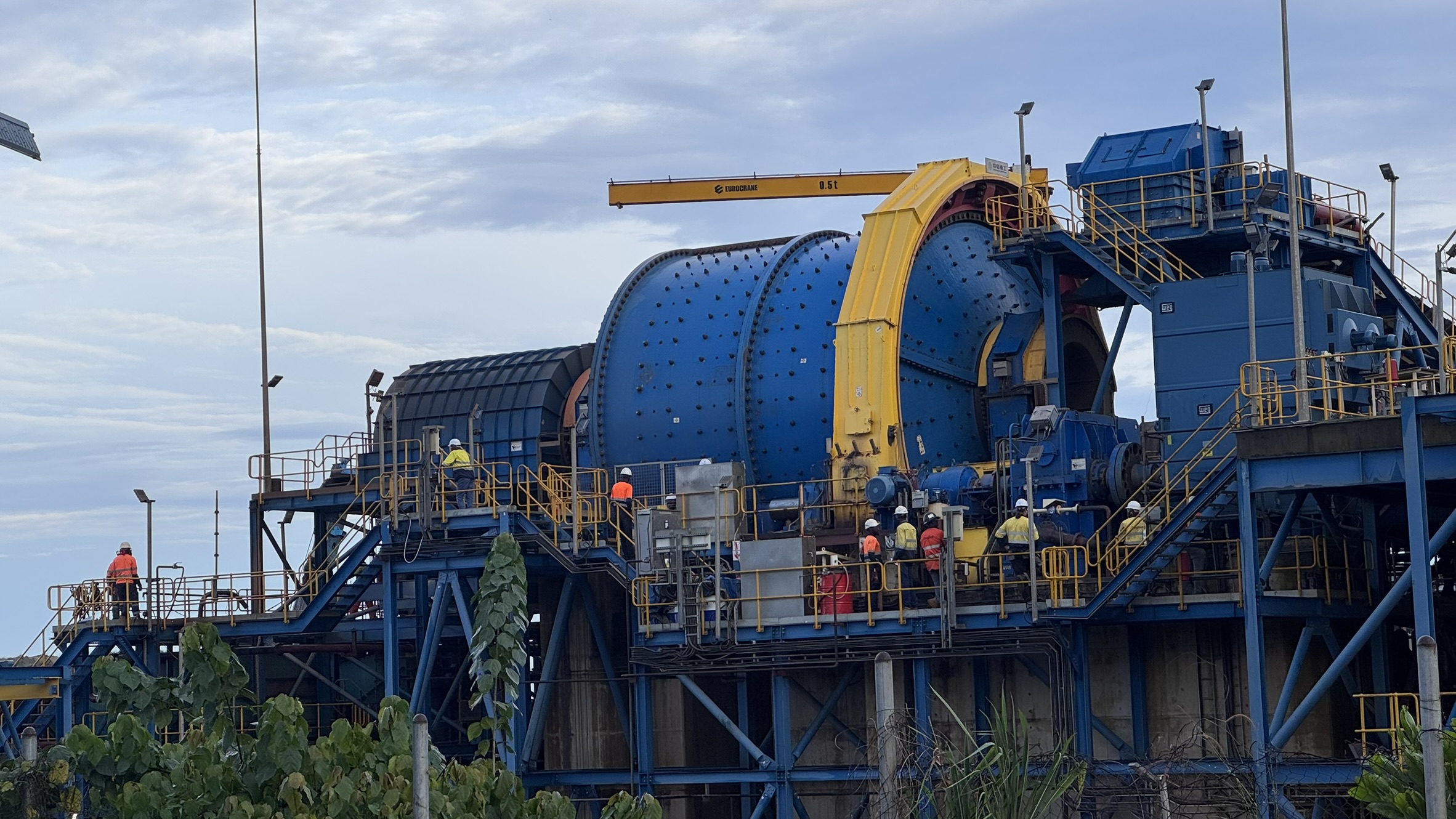
“Material was not being fed optimally onto the centre of the screens, causing around 80% of the material to run to one side of the two screens at extremely high velocities,” Tintinger explains. “Under these poor screening conditions wet sluggish material flooded the conveyor belt, resulting in excessive spillage and frequent plant downtime for cleaning.”
As a result, only a fraction of the available screening area was being used effectively. The combination of bias loading and excessive material velocity further reduced separation efficiency. Tintinger notes that while the application involved wet material, the fundamental challenge was familiar.
“Whether chutes are designed for dry material or slurry, the core issue is understanding material flow behaviour,” he says. “Our scientific understanding of material flow, combined with years of practical experience, was critical in identifying a suitable solution. The presence of water, however, added complexity when predicting exact flow behaviour within the constraints of the existing transfer layout.”
To reduce uncertainty and refine the design concept, the Weba Chute Systems engineering team employed Discrete Element Modelling (DEM). This enabled a detailed assessment of screen loading profiles and material distribution, allowing the team to visualise impact points, velocities and flow patterns across the screen decks before finalising the chute geometry.
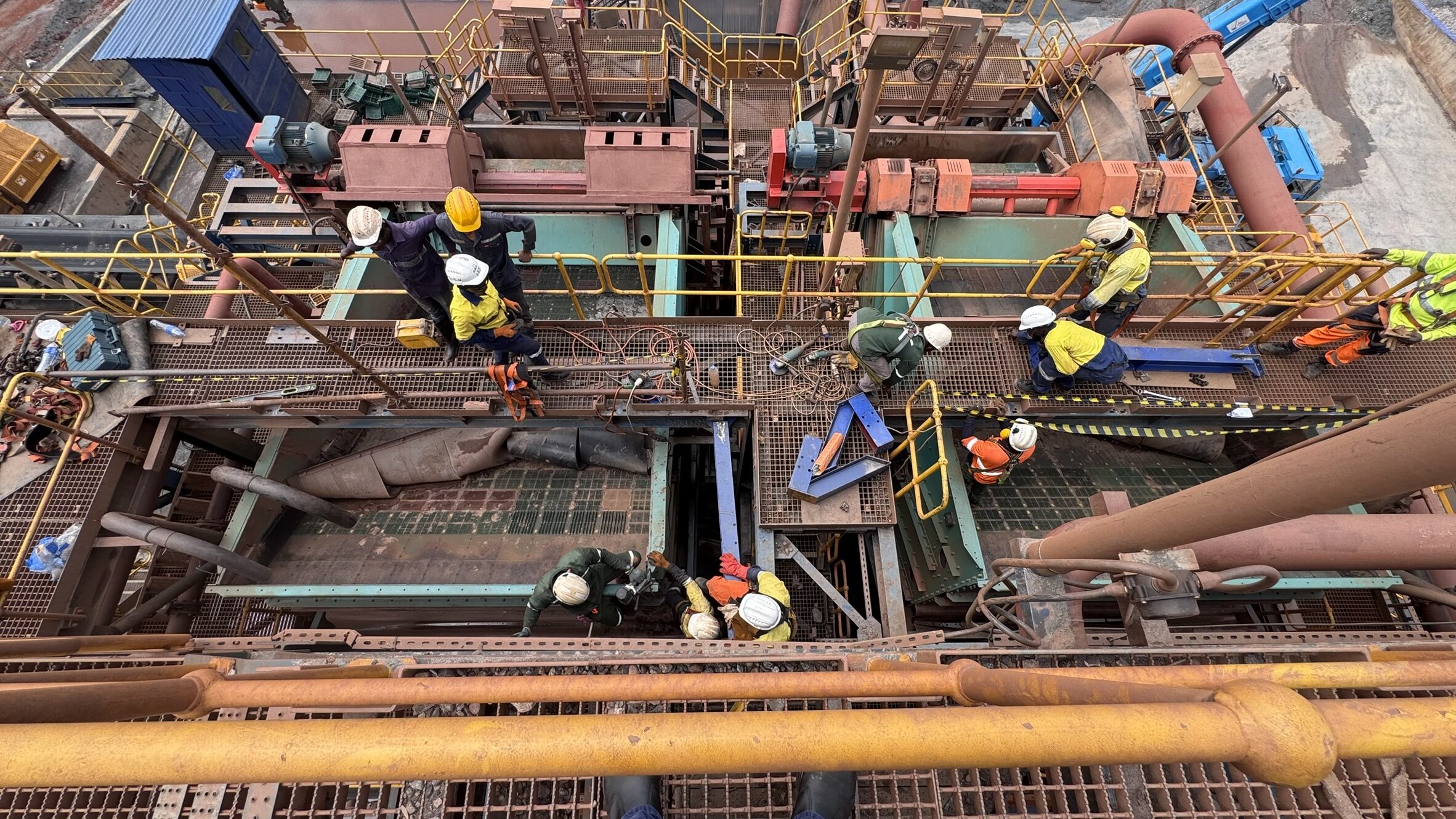
The final design incorporated several key engineering features aimed at delivering an even controlled feed at significantly lower velocities. One critical requirement was ensuring that both screens received the same mass flow. Due to the rotational dynamics of the mill feeding the circuit the discharge was naturally biased, resulting in a 60/40 split between the two screens.
To address this, Weba Chute Systems introduced a manually adjustable valve that allows operators to fine tune the split to an even 50/50. The valve also provides operational flexibility, enabling 100% of the feed to be diverted to either screen during maintenance, thereby improving plant uptime.
A second major innovation was the introduction of additional diverter gates and a flood box positioned above each screen. This configuration allows slurry and water to accumulate and then overflow evenly across the full width of the screen decks, rather than impacting in a narrow high-energy stream.
“This ensured not only even distribution across the screens but also a substantially lower discharge velocity,” Tintinger says. “The reduced velocity increases screening time which directly contributes to improved screening efficiency.”
Collaboration played a central role throughout the project. From the outset, Weba Chute Systems worked closely with the screen OEM, Sandvik Rock Processing, and the mine’s plant team to diagnose the problem and develop a coordinated solution.
“It was a detailed and constructive process with all three parties contributing experience and critical thinking,” Tintinger explains. “Each of us made targeted changes within our respective areas ensuring that the chute redesign, operating practices and screening configuration were aligned to the same performance objective.”
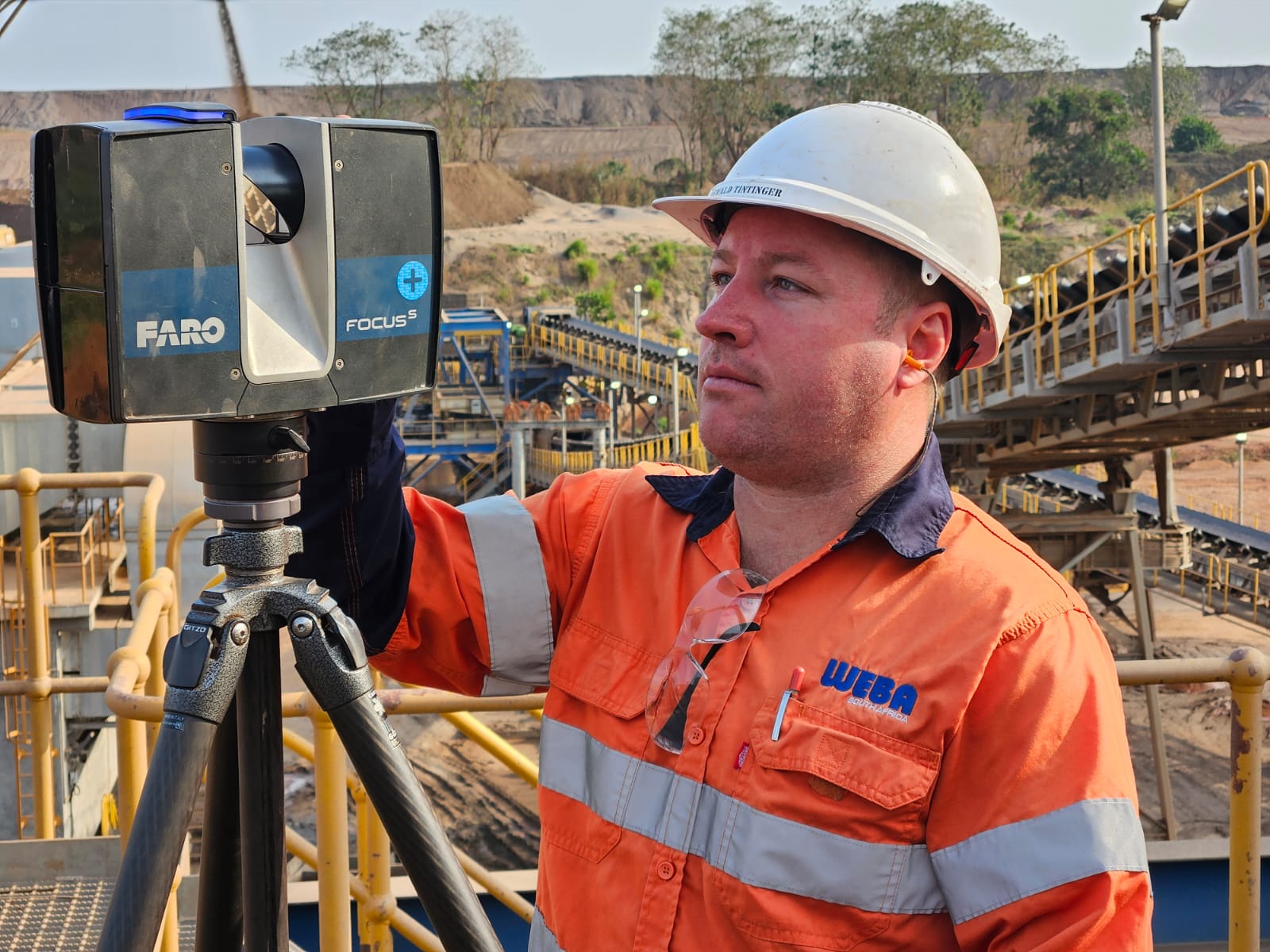
Another noteworthy aspect of the project was the customer’s requirement to fabricate key chute components locally in Sierra Leone to meet a tight schedule. Weba Chute Systems supported this approach by enabling on-site manufacturing in line with its design specifications while also providing quality control oversight, installation assistance and commissioning support.
“This hands-on approach reflects our philosophy of taking responsibility for outcomes not just designs,” Tintinger says. “A solution only truly succeeds once it has been implemented and proven under stable operating conditions.”
He adds that the project followed the company’s standard modus operandi, beginning with a physical site visit to the remote operation to observe conditions first-hand and to fully understand all factors influencing chute performance.
