
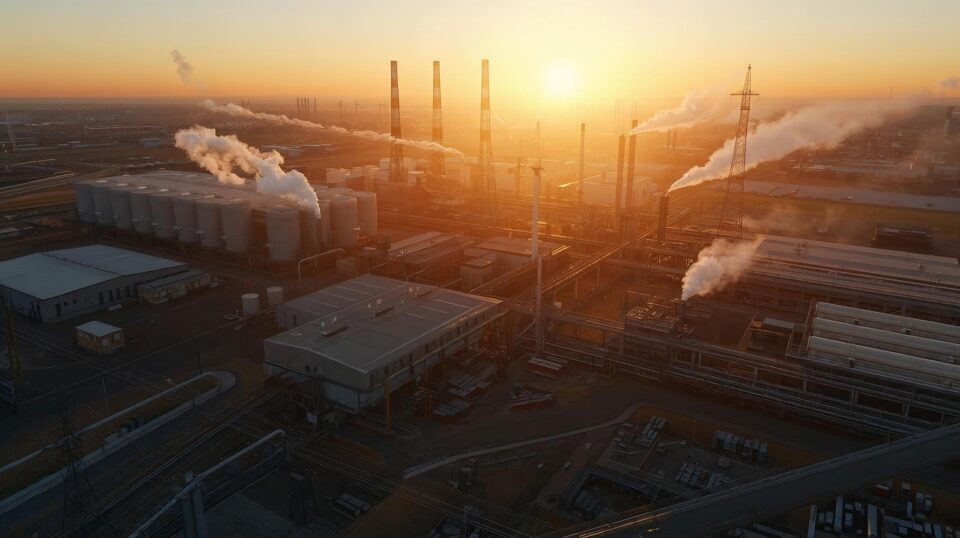
South Africa’s shift in industrial electricity pricing marks a major turning point in how energy-intensive industries will compete going forward. The new tariff structure approved for the Lion ferrochrome smelter departs sharply from the historical standardised model, introducing a performance-based system that rewards operational efficiency rather than offering uniform rates across sectors. This evolution reflects broader trends in emerging markets where utilities increasingly link industrial tariffs to efficiency benchmarks, technology investment, and grid optimisation.
Eskom’s move toward facility-specific electricity tariffs represents a structural change in industrial policy. Instead of applying one-size-fits-all rates, the utility now evaluates individual operations against strict efficiency metrics. A key element of the new agreement—the flat-rate electricity tariff—removes seasonal winter surcharges that previously forced energy-intensive producers into costly shutdowns. This stability provides long-awaited certainty in production planning. Globally, countries such as Norway, India, and Kazakhstan already apply similar performance-linked tariff structures for aluminium, steel, and ferro-alloy industries. These systems reward investment in modern technology, encourage efficient grid use, and promote long-term sustainability.
Eligibility for selective tariffs depends on detailed assessments of operational performance. Lion ferrochrome smelter has been classified as “the most efficient of the ferrochrome smelters,” setting the benchmark for tariff qualification. Key factors include energy consumption per ton of production, thermal efficiency of furnaces, specific power consumption, and future improvement potential. Facilities that have invested in modern smelting technology, advanced process control, and optimised cooling systems are more likely to qualify.
South Africa’s ferrochrome sector is undergoing structural consolidation—driven not by market positioning or scale, but by technical efficiency. Lion’s furnace design, cooling systems, and integrated process control enable it to use significantly less electricity than its peers. Its proximity to strong transmission infrastructure, reduced distribution losses, flat-rate tariff, and long-term operational certainty all contribute to its competitive edge. By contrast, Wonderkop and Boshoek—set to enter care and maintenance on January 1, 2026—were unable to meet the efficiency requirements necessary for tariff qualification. Their ageing furnace technology, high specific power consumption, limited automation, and infrastructure constraints make upgrades costly and impractical under current market conditions. Voluntary severance packages began on December 1, 2025, with retrenchments to follow, bringing significant socio-economic consequences for North West mining communities.
The broader dynamics of global ferrochrome markets also influence domestic policy. While South Africa remains a dominant chromite producer, high electricity costs have eroded the economic advantage of domestic beneficiation, even though ferrochrome production theoretically yields five times the value of raw ore exports. Illegal chrome mining, estimated to represent 10% of exports, further distorts pricing and undermines formal producers. Meanwhile, global competitors—especially in India, Kazakhstan, and Norway—benefit from lower energy costs and modern technology.
The restructuring of the ferrochrome sector has wider implications. Job losses in Wonderkop and Boshoek are expected to disrupt supplier networks, reduce municipal revenue, and affect household incomes, with secondary unemployment likely in local service industries. These effects expose contradictions within South Africa’s policy landscape: while government emphasises beneficiation, raw ore exports currently offer better financial returns, highlighting misalignment between energy pricing, industrial strategy, and beneficiation objectives.
Technological innovation, such as the SmeltDirect furnace design, offers potential solutions through enhanced energy efficiency, but adoption depends on stable long-term tariffs, predictable policy conditions, and access to capital. Although renewables may supplement industrial power demand, smelting’s requirement for consistent, high-quality electricity limits the feasibility of full grid independence in the near term.
Government may consider expanding tariff eligibility, strengthening enforcement against illegal mining, aligning beneficiation policy, and exploring Special Economic Zone incentives. For industry, priorities include consolidation, technological upgrades, strategic partnerships, premium product diversification, and leveraging raw ore export economics where appropriate.
South Africa’s selective tariff approach is likely to influence other energy-intensive sectors such as aluminium, steel, chemicals, and cement, ushering in an era where efficiency becomes the primary competitive differentiator. Future industrial success will depend on continuous operational improvement, strategic investment, regulatory collaboration, and business models adapted to evolving energy economics.
In the long term, South Africa’s industrial competitiveness hinges on coordinated investment in grid stability, energy efficiency innovations, and cohesive national policy direction.
