
As the industrial sector undergoes rapid digital transformation, conveyor systems – once regarded as passive infrastructure – are emerging as intelligent data sources. Shaun Blumberg, COO of Tru-Trac, notes that at the centre of this shift is the belt scale.
“This technology was historically focused on weighing material flow but is now transforming into a strategic tool for real-time production visibility, process optimisation and predictive analytics,” he says.
Tru-Trac’s AccuTrac™ AI-enabled Belt Scale platform represents the leading edge of this evolution. Rather than being a retrofit of outdated hardware, it has been designed around the principle that mass flow measurement should be dynamic, contextual and adaptive – not static and reactive. Developed in partnership with Germany-based SHG, the system fundamentally changes the way material flow is measured and managed in industrial environments.

Blumberg explains that conventional belt scales rely on assumptions such as constant belt speed, consistent loading geometry and stable mechanical conditions. In reality, these factors vary: belts stretch, rollers wear unevenly and bulk density fluctuates. This leads to drift in measurement accuracy, frequent recalibrations and reduced confidence in the data.
“The Tru-Trac AccuTrac AI Belt Scale does not rely on static assumptions. Instead, it continuously learns from the conveyor’s operating behaviour and compensates for factors such as drift, vibration and anomalies in the load profile in real time,” Blumberg says.
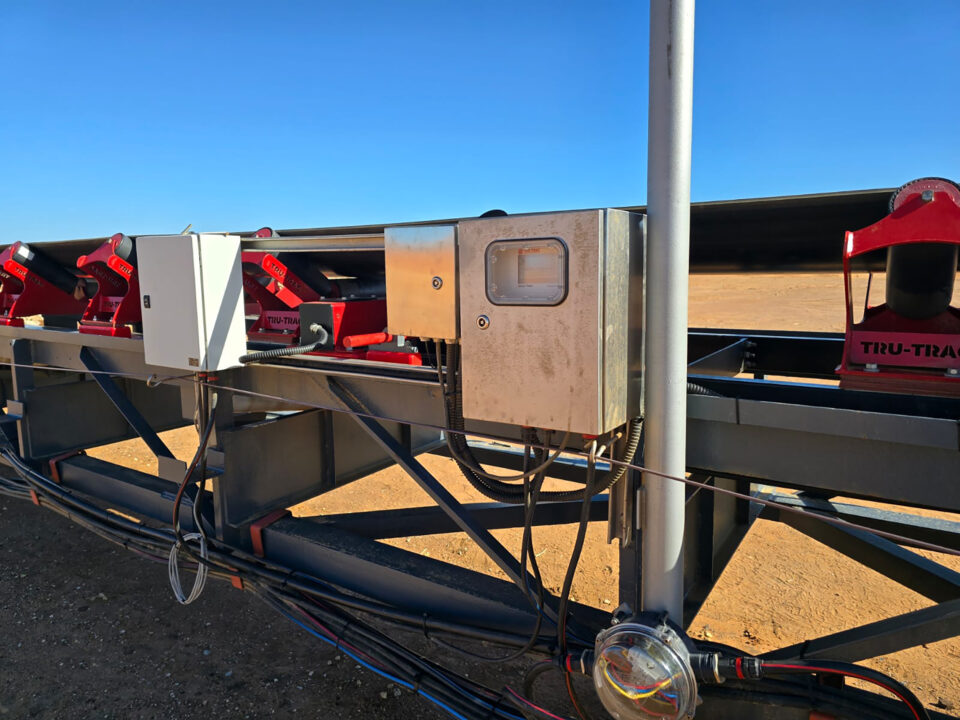
At the core of the system is a fusion engine that processes inputs including belt speed, load cell output, vibration patterns and environmental conditions. Adaptive algorithms then generate a normalised computational mass flow that more accurately reflects true material movement in demanding environments.
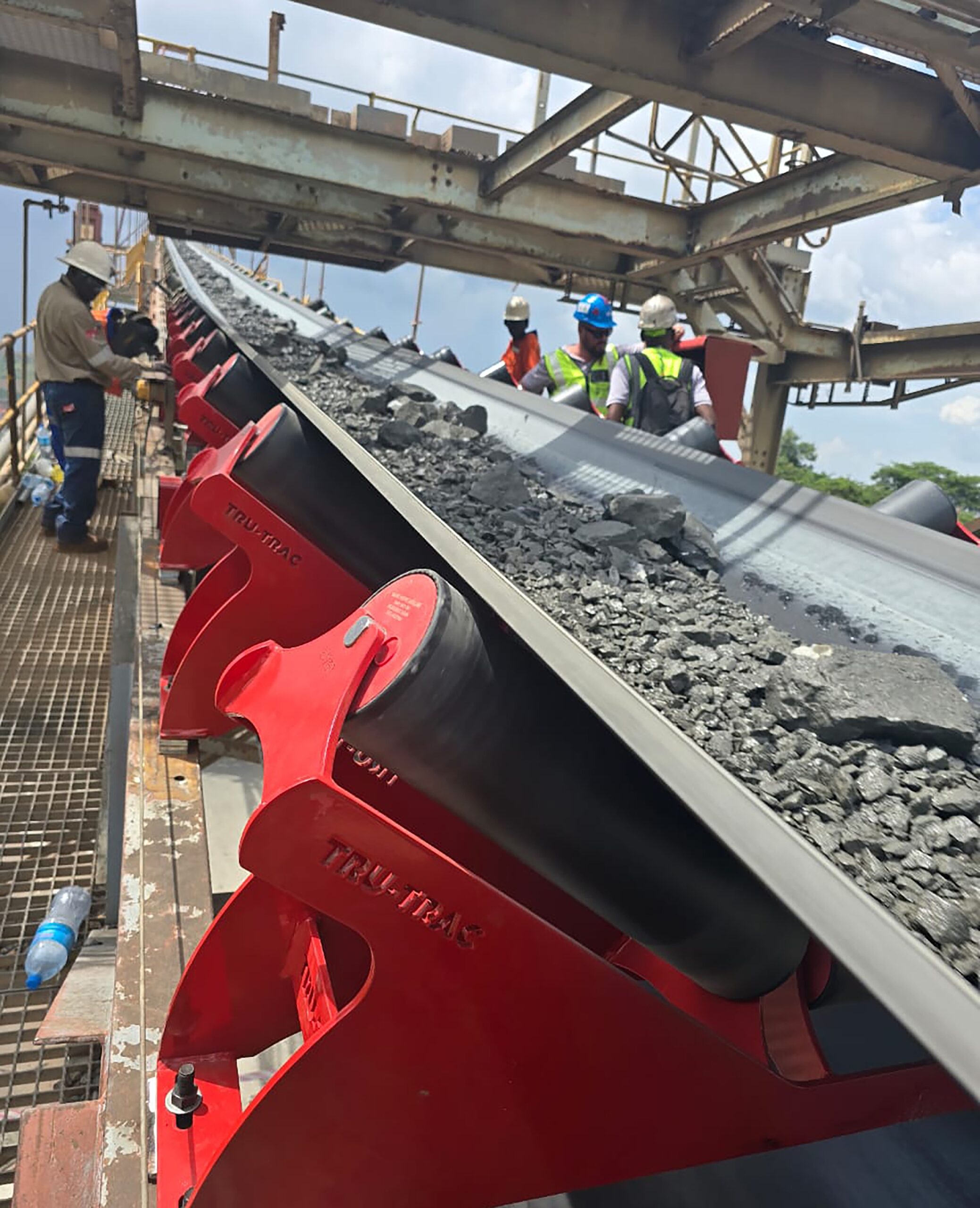
The intelligence is embedded at the edge rather than in a remote server, allowing the system to respond immediately without relying on constant connectivity. This provides operations teams with real-time information and alerts such as early indications of belt tension changes, density fluctuations or idler failures.
“Unlike traditional systems that provide delayed or averaged readings, the Tru-Trac AccuTrac AI Belt Scale delivers contextual data that can be acted upon immediately,” Blumberg adds.
Beyond mass flow measurement, the scale also performs diagnostic functions. It can identify belt slip or stretch, uneven loading, mechanical wear and systemic inconsistencies. By combining these roles into one device, the system reduces the need for additional sensors and infrastructure, simplifying installation and maintenance while lowering potential points of failure.
Calibration, often a challenge with conventional belt scales, is managed through intelligent auto-calibration. The Tru-Trac AccuTrac™ AI Belt Scale system references historical data, production baselines and throughput values to optimise its internal models, improving accuracy with use rather than degrading over time.
The platform is also designed for integration with plant control systems using standard protocols. This allows belt scale data to feed into wider process control loops, such as adjusting feed rates based on downstream capacity or modifying loading geometry in response to live conditions.
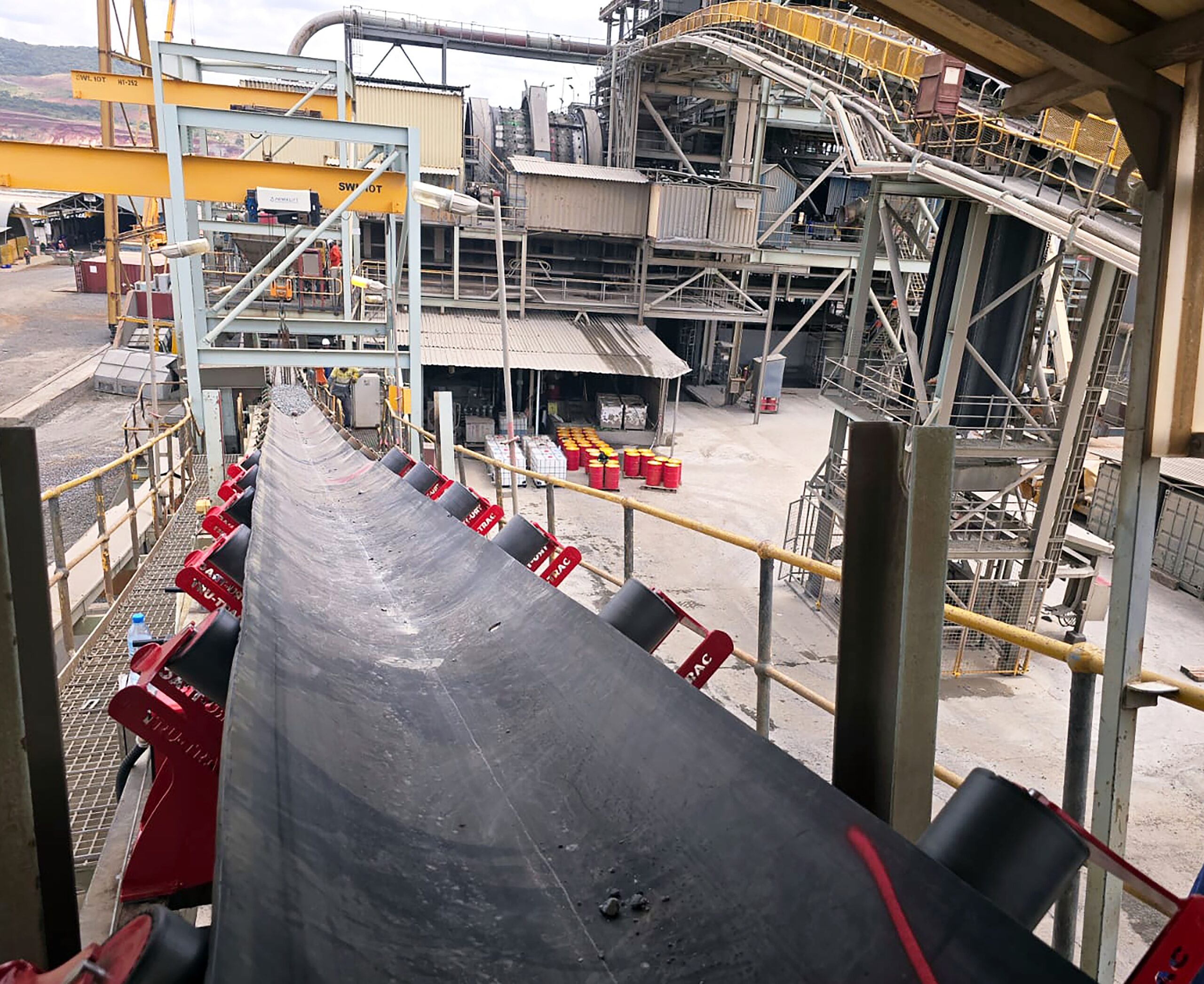
In this way, the system moves the belt scale from a static measurement device to an embedded intelligence platform, delivering operational insights across industries such as mining, cement and ports.
“Our AccuTrac AI Belt Scale is designed to adapt continuously to real operating conditions. By embedding machine learning into the system, we can deliver reliable mass flow measurement and diagnostics that support more accurate, efficient and responsive operations,” Blumberg concludes.
