


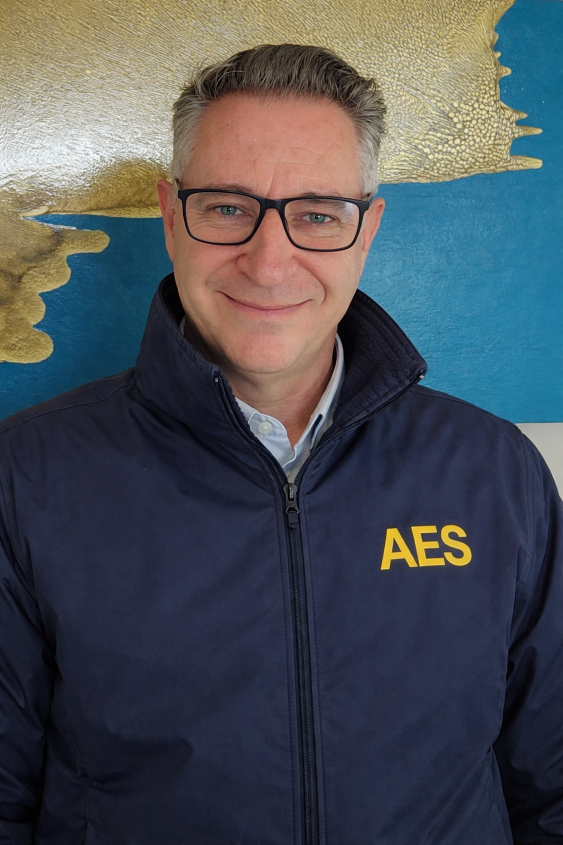
Specialist boiler operations and maintenance service provider, Associated Energy Services (AES) improved energy efficiency by 35% at a large FMCG manufacturer’s site and followed up with a 21% improvement at a second. A soya mill struggling to generate sufficient steam to operate its processing facility – using two 20 tonne-per-hour boilers – ultimately needed only one to exceed nameplate capacity, once AES stepped in.
A frozen foods manufacturer – and longstanding client – recorded a 15% operating cost saving once AES had injected skills, de-risked its boilers and completed repairs to increase steam availability and uptime. Today, this client is working closely with AES on decarbonisation solutions.
“While these examples and numbers speak for themselves, boardrooms and boiler rooms are not always aligned – and balance sheets do not always reflect the true benefits of outsourcing to a specialist service provider such as AES,” observes Commercial Director Dennis Williams.
The risk of zero value
Misconceptions emerge when prospective clients question the perceived discrepancy between operating a boiler as a savings-based cost centre, versus AES operating it as a value-adding profit centre: “The answer is that the client’s focus is purely on managing costs – while ours is on adding value,” Williams explains.
He believes the fixation on cost reduction arises when companies are not invested in finding a different or better way: “The most comfortable solution is maintaining the status quo – but that is not necessarily right. A substantial opportunity is completely missed. Revisiting the entire premise of how manufacturers are generating and using steam usually identifies structural improvements, different operational interactions and how metrics can be adjusted to improve sustainability and risk mitigation. By doing this, we ultimately achieve what we set out to do: deliver a quality, effective energy supply to production facilities which improves production and efficiency.”
A short-sighted focus on cutting costs might benefit the bottom line, but could have detrimental longer-term consequences: “Reducing your maintenance spend or asking suppliers to bring down costs for statutory inspections increases the risk of suppliers using sub-standard consumables – or reducing time spent on key activities, increasing the risk of outages. Apart from demotivating the boiler room staff who are inevitably blamed for breakdowns and outages, supplier trust could also be eroded. Money may be saved, but zero value is created.”
The core business of energy
Whether canning dog food, producing paper or making conveyor belts, manufacturers cannot be energy specialists. It is not their core business. AES, which has concluded more than 50 outsourcing contracts (28 currently active) with over 75 boilers under its management, has expertise and skills spanning operations, maintenance – as well as the critical risk mitigation associated with energy and combustion vessels under pressure.
“That is our core business,” notes Williams, adding that through outsourcing, companies have access to specialists with specific capabilities as part of the package delivered by AES.
Additional benefits include AES’s procurement and logistics capabilities, guaranteed operating efficiency that can be measured against a pre-agreed price for steam delivered, removal of day-to-day operating risk, staff training and management, an in-house laboratory for fuel and ash testing, advice about repairs and access to the AES projects division for expansions, changes and future projects.
“Clients should not be focusing on the rand per ton of fuel delivered to their site – but on the steps in between this and the delivery of steam used in the production of each unit. The plant must diligently and effectively use that energy. This happens when it gets quality steam at the right pressure with the right dryness factor, and pressure fluctuations are managed within a tighter band than the client could themselves. This should result in the lowest-cost energy requirement per unit of product. “
Unpacking true value
On average, AES saves clients 10% on what could be achieved via their own in-house operation.
An hour’s downtime is an hour’s worth of product that can never be sold – so the incremental benefits can be substantial: “For example, in a paper mill, operating speed is where money is made or lost. To run at maximum speed, every heat transfer surface must be working perfectly, and the incoming steam must be at the right pressure. If pressure drops too far, there is an outage and the mill shuts down. Even if the shutdown lasts just 15 minutes, the added start-up time means hours could be lost.”
Another key concern is product safety: for example, raw material wastage at a canning facility experiencing a steam outage can be very dangerous: “During a critical temperature hold stage, all material must be scrapped – as it no longer meets process safety requirements or quality specifications. If product was headed to a designated client, lead times are impacted,” Williams points out.
Value beyond price
Fuel savings alone can be significant, Williams says, referring to a R2 – 4 million saving for an existing client due to AES’s supplier relationships and logistics expertise – over and above efficiency-related steam savings already effected. Client overspending on fuel could often indicate additional problems such as wet steam driving up production process steam usage.
Customers also benefit from AES’s strict occupational and process safety protocols and working practices: “It is essential that the client can rely on us, knowing that their assets are legally compliant, maintained, operated and managed in a safe way – and at the same time, are delivering all of the value which we promised. That is our main focus and we take it seriously.”
Price can never be the sole focus, Williams concludes: “The steam price might be the same or slightly higher. However, you need to see beyond this – at how the steam is supplied – and the benefits provided through waste reduction, product quality and shorter lead times. Those value-adding benefits reveal themselves and go far beyond price, and beyond the boiler house itself.”
