


Technology has made it possible for mining to make meaningful gains in the comminution space if it is applied with precision and discipline.
According to JD Singleton, Comminution Director for Europe, Middle East and Africa (EMEA) at Weir, such advances are crucial to the mining sector in meeting its carbon emission goals while controlling costs. At the recent Mining Indaba Africa held in Cape Town in February 2026, Singleton was moderator of the session on Smarter Energy Use in Crushing and Milling, drawing insights from industry leaders and researchers.

“An interesting element of the discussion was the recognition that the most efficient kilowatt-hour is the one never used,” he explains. “Selective mining and early waste rejection reduce the volume of material entering downstream circuits, lowering the energy required for size reduction. However, once material enters the plant, precision becomes critical.”
He points out that comminution phases in mineral processing remain primary consumers of energy in mining, requiring intense focus to reduce carbon emissions and operating cost.
“Crushing and screening circuits operate sequentially, with each stage influencing the next,” he explains. “Correctly configured primary and secondary crushers establish appropriate reduction ratios while accurate screening ensures that only genuine oversize material is returned for further breakage.”
By contrast, poor classification sharpness leads to unnecessary recirculation, increased energy draw and accelerating wear. He explains that Weir’s comminution portfolio is structured around this stage-specific optimisation philosophy.
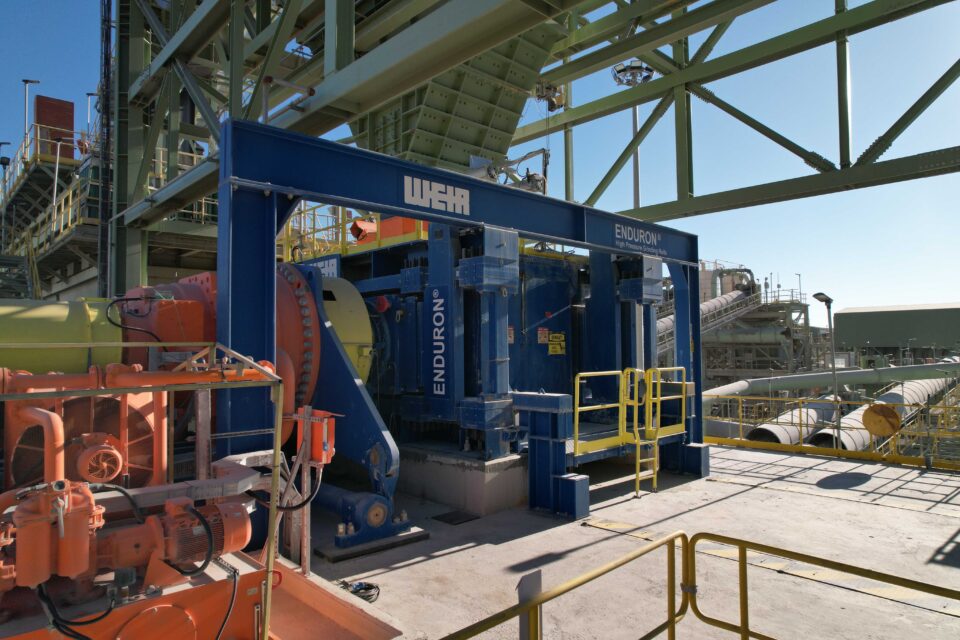
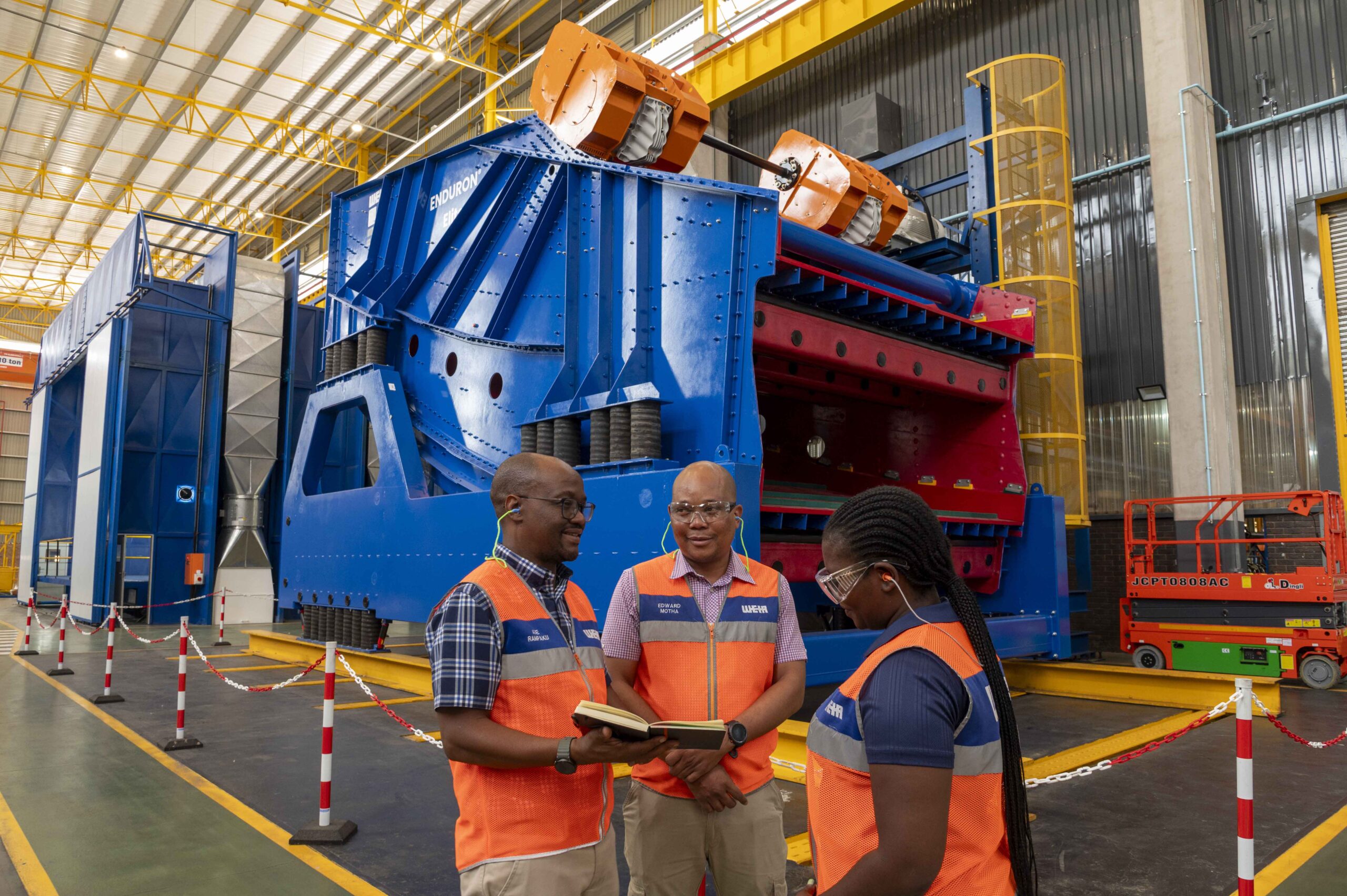
“Weir’s solutions draw upon its ENDURON range of primary crushers, secondary crushers and high pressure grinding rolls (HPGRs) as well as our vibrating screens, advanced exciter systems, screen media and ESCO wear components,” he says. “These technologies are complemented by digital condition monitoring through Weir’s NEXT Intelligent Solutions platform.”
In terms of how technology has advanced, Singleton points to HPGR installations as an illustration of quantifiable savings. Suitable HPGR applications have demonstrated reductions in energy intensity of 5 kWh per tonne compared to more conventional alternatives.
“Over large throughputs, this translates into meaningful reductions in power demand and operating expenditure,” he says.
Screening performance is another high impact variable, with Weir’s ETX exciter technology supporting sharper particle separation and reduced misplacement. By improving classification efficiency, operations can minimise rehandling of correctly sized material and maintain circuit balance.
Singleton notes that the adoption and installation of technical advances is not uniform across the sector, highlighting how engineers in some operations readily test new approaches while in others, the established practices dominate decision-making.
“When exploring the opportunities in comminution technologies, commercial clarity is important,” he explains. “This means that any optimisation initiatives must withstand straightforward financial scrutiny.”
Energy reductions, throughput improvements and wear savings must be expressed in transparent economic terms that support investment decisions, he insists. In Singleton’s view, credible business cases are those that can be explained simply and defensibly.
