
The mining industry can rest assured: its future is in good hands.
This was the lasting impression after an inspiring final day of Investing in African Mining Indaba 2026. Beyond creating opportunities for young people looking to enter the industry, the day’s events featured numerous young mining professionals already active in the sector.
They presented an encouraging picture of where their industry is headed. Committed, energised and bristling with exciting ideas, young people at the event shared exciting ideas for building a future-fit mining sector that supports a better world.
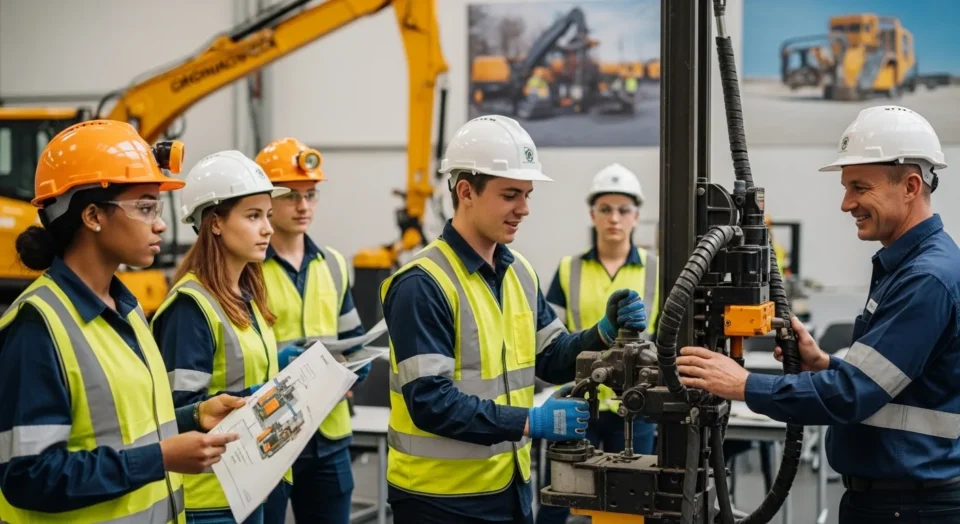
To enable the entry of more young people into mining, the event’s Young Professionals Programme – in collaboration with Wits University – saw more than 600 young people attend the event.
Leaders today
Delivering the keynote speech on the day, Phumzile Mgcina, South Africa’s deputy minister of mineral & petroleum resources, said government was doing a lot to develop young talent through initiatives like the National Student Financial Aid Scheme (NSFAS) – which now funds one million students – as well as the Junior Miners Exploration Fund, which now has R2 billion in pledges.
“However, that alone is not enough,” she said. “Funding the future of mining and equipping young people with the required skills demands a collective effort from both the public and private sectors, as well as young people themselves.”
She told a packed audience at the event’s main River Nile Stage that young people were not just leaders for tomorrow, but leaders today.
“Don’t wait for the future; act now,” she said. “The time for bold action is now.”
Proving that young people are ready to take that advice, and act now, were several impressive young speakers at the Mining Indaba, identifying solutions for the industry that could improve lives for those around them.
Digital solutions
Amogelang Moila, a geometallurgy and machine-learning PhD student at Wits, said there was an opportunity for the industry to train its workforce in the use of digital tools.
“Digital data training would equip all mining professionals to find solutions to the challenges they face every day,” she said. “Sensors and automated smart machinery are
generating vast amounts of data. Our people must be empowered to deploy machine learning to extract insights from it.”
Katleho Maeko, deputy head of legal at Minerals Council South Africa, identified legal complexity as a challenge for the industry.
“Legal frameworks need to be enabling,” said Maeko. “Complexity doesn’t encourage investment, so there are opportunities for reform of the legislation, and to use digitisation and data to simplify licensing.”
Making women feel safe
Making a strong impact at the event was Lindokuhle Zwane, responsible for health and Women in Mining at Minerals Council South Africa. She encouraged mines to adjust their “Zero Harm” reporting to include numbers for GBV and sexual harassment.
“Young women feel fear every day, not just about safety and occupational injuries, but due to the very real threat of gender-based violence,” she said. “GBV is not a peripheral issue. We need to look at it as a safety and sustainability imperative.”
She encouraged mining CEOs to fund the roll-out of more Thuthuzela Care Centres – one- stop rape-treatment and reporting facilities – in their host communities.
Opportunities for all
Sephela Makete Thema, GM of tailings and remining at Fraser Alexander, encouraged young people to think of mining as a sector that offered careers in almost every conceivable discipline.
“Mining is so broad. There is a place for almost every skill set,” he said. “Data, sustainability, legal, economics, all the way to communications and storytelling. There is a place for everyone in the mining value chain.”
Nomvula Mahlangu, a mining intern and volunteer at AfriMine, said she saw opportunities for mining to enhance the people-management and social aspects of its processes, and to better cater to the mental-health needs of its people.
“Mining is a very intense workspace,” she noted. “Sometimes in the rush to ensure safety and productivity, one can overlook worker happiness. Stressed workers are less effective.”
She said she had conducted an online survey among young people in mining to determine what challenges they faced. The most common responses identified issues around access, as well as the relationship between study curriculums and real-world experience.
Minerals Council South Africa CEO Mzila Mthenjane said Africa was in an excellent position for the future, given its massive youth advantage. He acknowledged the passion and talent of the young people in the sector and their commitment to making a positive difference.
“Cry not, my beloved Africa,” he said. “For your youth are not waiting for hope; they are creating it.”
Investing in African Mining 2026 ran from February 9 – 12 at CTICC in Cape Town
