
Most conveyors experience some degree of material loss due to spillage, leakage, dust, and carryback, collectively known as fugitive materials. This loss can range from 3% in poorly operated and maintained systems to less than 0.1% in world-class operations.[1] Although fugitive materials cannot be completely eliminated from bulk material handling conveyors, the issue can be effectively managed, leading to cleaner, safer and more productive operations.
The symptoms of a failure to control fugitive materials include unplanned downtime, excessive cleaning costs, premature equipment failure, regulatory violations, and safety incidents. Addressing these symptoms with workable, long-term solutions will enhance performance, housekeeping and safety, and boost profitability.
When Material “Goes Rogue”
The nature of fugitive material problems from any conveyor is indicated by the location and particle sizes of the accumulations. Fugitive materials are generally categorized into spillage, leakage, dust and carryback.
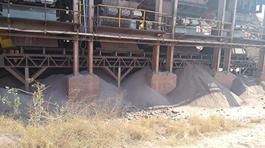
Spillage escapes the belt and collects under the conveyor in both the loading and discharge zones. Piles of spillage accumulate rapidly and occur due to overloaded belts, mistracking, and insufficiently sealed loading and discharge zones. This is best remedied with a Skirtboard Liner. A wearliner and a canoe liner protect the enclosure from abrasion wear.
