
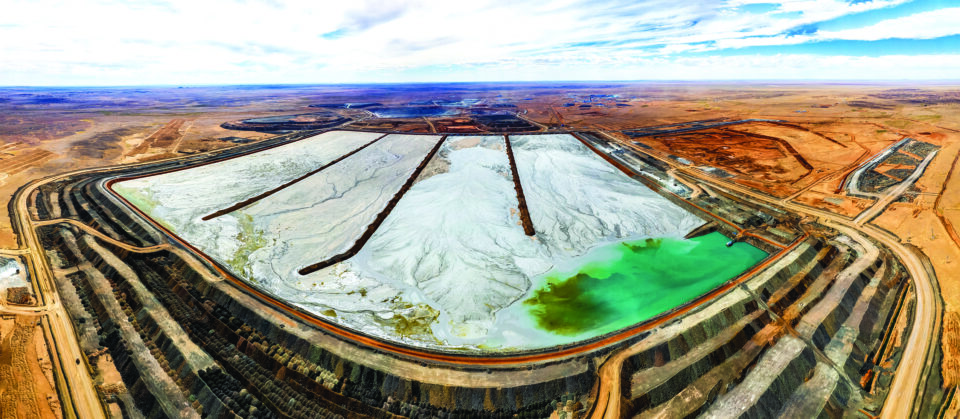
Rare earth mining generates tailings with complex physical and chemical behaviour. At the Mt Weld operation in Western Australia, managing these tailings safely, sustainably, and economically has been a critical operational challenge.
This article outlines how Lynas Rare Earths approached tailings management at Mt Weld, focusing on water, consolidation, and long-term risk reduction — and why early design decisions proved more important than adding new infrastructure.
Why Rare Earth Tailings Present Unique Challenges
Rare earth tailings are typically very fine-grained and water-sensitive. At Mt Weld, tailings did not behave as expected in an arid environment. Instead of drying and beaching naturally, fine material remained suspended, retaining water and limiting consolidation.
This behaviour created several risks:
-
Increasing water demand in a remote location
-
Reduced storage efficiency
-
Inability to traffic tailings surfaces
-
Pressure to continuously raise or build new tailings storage facilities
In rare earth mining, where water quality is critical for downstream processing, these challenges are amplified.
The Mt Weld Context: Water, Cost and Constraint
When Lynas began operating the Mt Weld concentrator, water quickly emerged as a key constraint. Clean water was essential for processing, yet water availability was limited and expensive.
Early in the operation, the default solution presented was to construct additional tailings dams. However, building new facilities at Mt Weld is costly due to remoteness, logistics, and regulatory requirements. At the time, large capital investments were not viable.
Rather than accepting continuous dam construction as inevitable, Lynas chose to reassess how tailings were being managed.
Why Tailings Consolidation Matters
Poorly consolidating tailings create long-term operational and safety risks. Liquid or slurry-based residues retain high pore pressures, occupy more volume, and limit opportunities for progressive rehabilitation or recovery.
At Mt Weld, the inability to access tailings surfaces with equipment was a direct result of insufficient consolidation. More critically, without available tailings capacity, production itself was at risk — a reality well understood across the mining industry.
Improving consolidation became essential not only for storage efficiency, but for operational continuity.
Mechanical Consolidation as Part of the Solution
Lynas began working with Phibion nearly a decade ago, initially through a low-risk trial. The approach involved accelerated mechanical consolidation — mechanically working tailings surfaces to promote drainage, exposure to air, and faster drying.
Rather than relying solely on chemical additives or passive drying, mechanical treatment altered the physical behaviour of the tailings. By placing tailings in thin layers and treating each layer progressively, consolidation could occur more predictably.
This process was integrated into deposition scheduling across multiple tailings facilities, allowing treatment to occur continuously as operations progressed.
Observed Outcomes at Mt Weld
Over time, this approach delivered measurable operational benefits:
-
Approximately 50% improvement in tailings consolidation
-
Around 50% reduction in storage volume required
-
Avoidance of A$8–10 million every two years previously associated with dam height increases
-
Reduced reliance on large-scale water management infrastructure
-
More predictable tailings behaviour and improved trafficability
-
Enhanced long-term safety outcomes due to lower saturation and pore pressure
Importantly, these outcomes were achieved without constructing new major infrastructure or filtration plants.
Safety, Sustainability and Resource Recovery
Earlier consolidation delivered additional benefits beyond storage efficiency. Solid tailings surfaces reduce the risk profile associated with liquid residues and improve overall dam safety.
At Mt Weld, consolidated tailings also created opportunities for future material recovery. Approximately seven percent of the tailings contain rare earths, which can potentially be reclaimed and returned to the processing circuit.
Progressive consolidation also reduced the site footprint and improved long-term environmental performance, aligning tailings management with broader sustainability objectives.
Recognition and External Validation
In 2022, Lynas was recognised as a finalist for a Western Australian environmental excellence award. This external validation reinforced that the approach delivered tangible environmental and safety improvements, not just internal operational gains.
Lessons for Rare Earth Tailings Management Globally
The experience at Mt Weld highlights several broader lessons for rare earth operations:
-
Tailings behaviour is highly site-specific and must be understood early
-
Water management decisions strongly influence long-term cost and risk
-
Continuous dam raising is often a consequence of early assumptions, not inevitability
-
Improving consolidation earlier reduces footprint, cost, and liability
-
Solid residues are inherently safer than liquid or slurry-based tailings
While no single solution applies to all sites, rare earth operations managing slurry-based tailings should reassess whether consolidation performance can be improved.
A Long-Term Perspective on Tailings Risk
Tailings management is not a short-term engineering exercise. Decisions made early in the life of a facility shape cost, safety, and sustainability outcomes for decades.
At Mt Weld, addressing water and consolidation early fundamentally changed how tailings are managed — reducing long-term risk while improving operational flexibility.
For rare earth mining operations operating under increasing environmental, regulatory, and geopolitical scrutiny, these considerations are becoming central to long-term success.
