


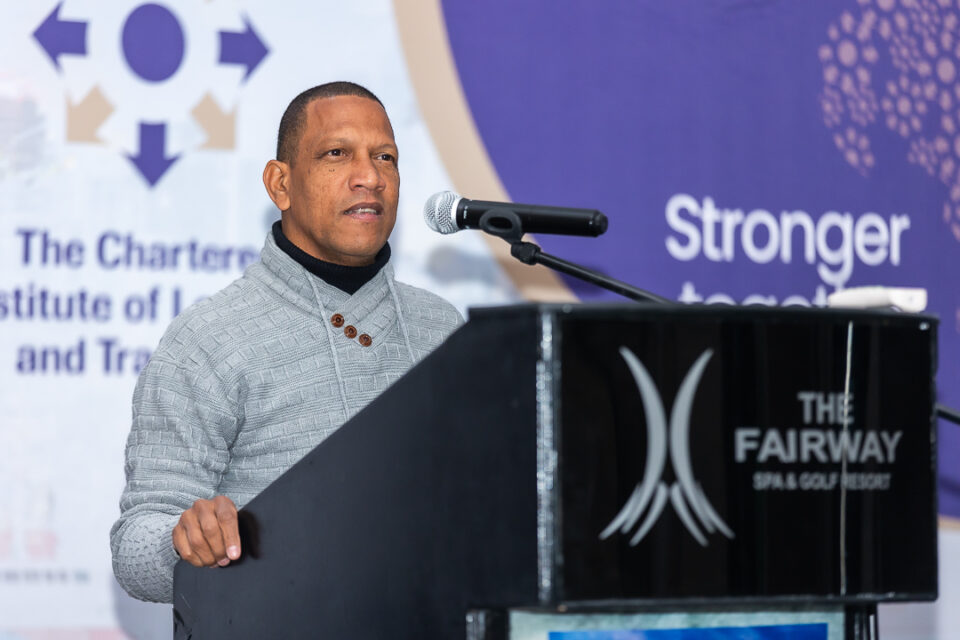
The Chartered Institute of Logistics and Transport (CILT) will bring leaders from Namibia, South Africa and Zimbabwe together at Automechanika Johannesburg for its Regional Conference 2026, taking place at Gallagher Convention Centre in Midrand on 28 and 29 October 2025.
Held under the theme ‘Driving Innovation, Bridging Borders for an African Future’, the conference will examine how transport, logistics and automotive ecosystems can support connected economies across the continent. The programme places collaboration at the centre of discussions on trade corridors, harmonised systems, safety, skills and the changing mobility landscape.
Elvin Harris, President of CILT South Africa, says the conference offers a meeting point for sectors whose success increasingly depends on coordinated action. “Transport and logistics connect every part of the economy. This gathering will create space for discussion on the infrastructure, standards, technology and people needed to move goods and opportunities efficiently across the region.”
Connecting corridors and enabling trade
A central conference focus will be the future of Africa’s strategic road and rail corridors. Delegates will explore ways to reduce border delays and non-tariff barriers, strengthen one-stop border posts, and improve links between ports, dry ports and inland terminals.
Discussions will also consider investment approaches for corridor infrastructure, including public-private partnerships and blended finance, alongside the relationship between transport networks, the African Continental Free Trade Area and regional industrialisation.
Dr Tapiwa Mujakachi, President of CILT Zimbabwe, states that efficient cross-border systems are essential to prosperity. “Regional trade depends on reliable routes, predictable processes and a commitment to solving operational challenges. The conference will bring attention to the work required to make corridors serve businesses, communities and national development priorities.”
The agenda will further address harmonisation across borders, including vehicle standards, roadworthiness, weights and dimensions, customs documentation, permits and professional qualifications. Delegates will consider the development of common regulatory frameworks for new vehicle technologies, as well as the importance of aligning systems across regional economic communities.
Innovation, safety and the workforce of the future
The conference will also examine the safety and security of people, cargo and freight corridors. Key themes include reducing road fatalities, promoting driver wellbeing on long-haul routes, countering cargo crime, strengthening fleet compliance, and using technology for tracking, monitoring and incident response. Cooperation among operators, regulators and law-enforcement agencies will feature as a foundation for safer regional supply chains.
Conversations will cover electric and new-energy vehicles, supporting infrastructure, local manufacturing opportunities, digital freight and last-mile platforms, smart logistics, data and artificial intelligence. Attention will also be given to policy support, funding and incubation for start-ups and small enterprises, together with the role of special economic zones in automotive and component innovation.
Prisca Mayumbelo, President of CILT Namibia, says the programme recognises regional opportunities. “Africa’s mobility future will be shaped by innovation that is relevant to local conditions and supported by capable institutions. Sharing experience across countries can help turn promising ideas into practical improvements for industry and society.”
Education, training and skills development will complete the programme’s core themes. Sessions will consider new-energy vehicle and digital logistics careers, technical and vocational pathways, industry-academia partnerships, work-integrated learning and professional development. The agenda will also highlight approaches to attracting young people and women into transport, logistics and automotive careers, while addressing funding for scarce-skills training.
Formal conference sessions will be followed each day by opportunities for delegates to visit the Automechanika expo floor and engage with exhibitors. CILT expects the event to encourage durable regional relationships and help shape solutions that support an African future built on connected African systems.
