
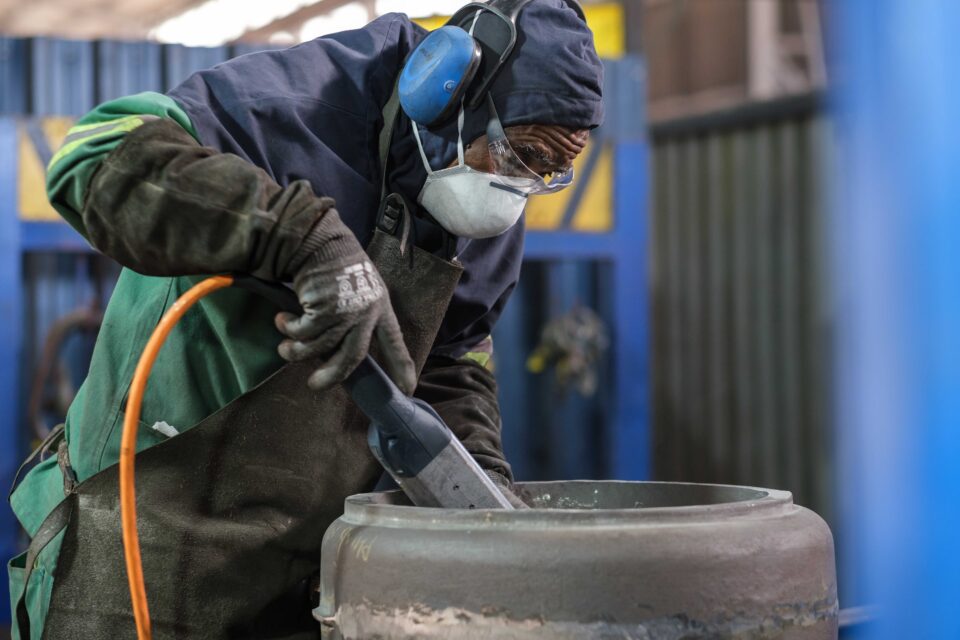
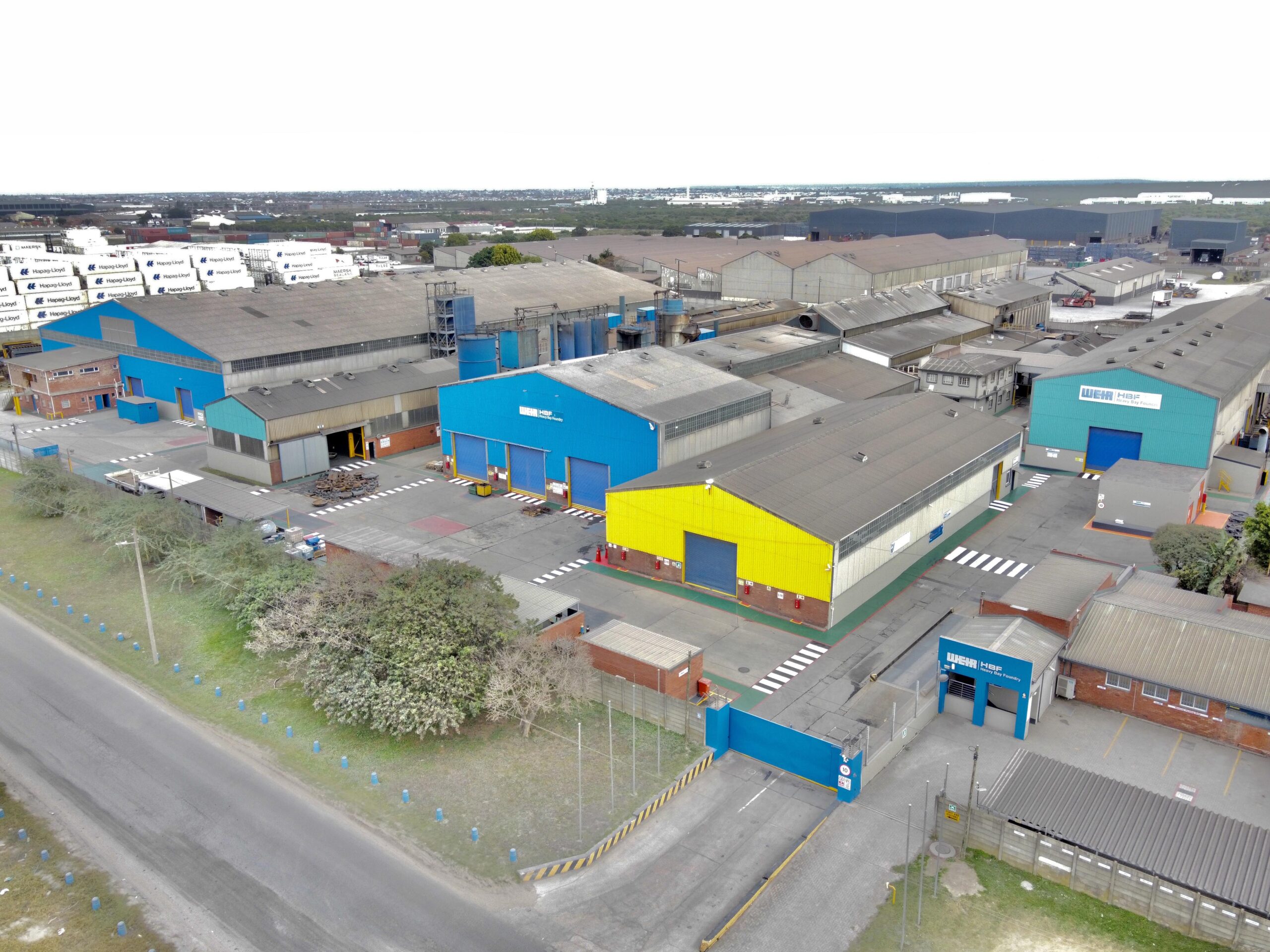
In the Eastern Cape port city of Gqeberha, Weir’s Heavy Bay Foundry (HBF) is undergoing unprecedented expansion, establishing itself as a central manufacturing hub within the group’s global supply network.
The foundry produces large high performance cast components used in Weir’s extensive range of pumps, screens, and crushers. Following major infrastructure and process upgrades, the facility has doubled its production capacity to meet rising demand from the global mining sector.
Coenie de Jager, Head of Operations at Weir HBF, notes that the foundry’s installed capacity for heavy castings exceeding 500 kg has increased to 600 tonnes, with further optimisation and investment expected to push this figure to as much as 1,000 tonnes.
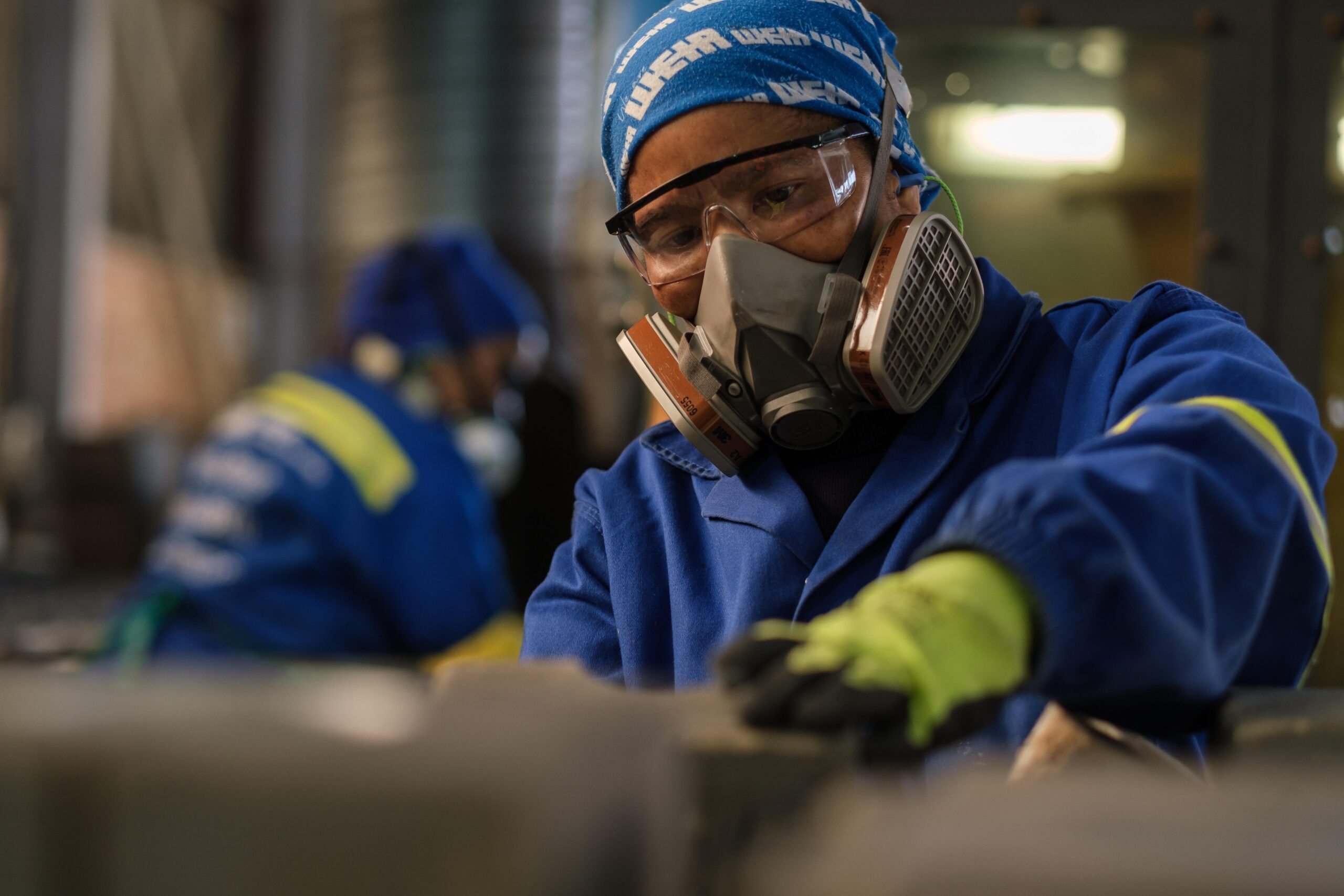
“This expansion is driven by a series of targeted projects including casting pit extensions, melt shop upgrades and the integration of advanced pattern development systems,” De Jager says. “Each of these initiatives is aimed at removing bottlenecks and enabling higher production throughput.”
Weir HBF is among the few foundries in South Africa capable of producing exceptionally large castings – up to 4 metres by 4 metres in size. The installation of new four tonne and six tonne induction furnaces is currently in progress, with commissioning scheduled for early 2026. Complementing these are new heat treatment furnaces, fettling booths, automated grinder and paint booths nearing completion.
A major milestone in the foundry’s evolution has been the acquisition of Xmeco Heavy Engineering, a fully equipped machining facility that significantly extends Weir HBF’s capabilities. This addition allows the foundry to deliver a comprehensive end-to-end manufacturing solution. “
We now machine components weighing up to 13 tonnes each, with hardness levels between 650 and 750 Brinell (HB) – a capability matched by very few facilities worldwide,” De Jager says.
“By consolidating our operations into a vertically integrated manufacturing facility, we have gained full visibility and control over every stage of production,” he says. “This allows us to strengthen delivery reliability and minimise dependence on external suppliers. With in-house capabilities spanning design, R&D, foundry, machining and assembly – supported by recent upgrades and process refinements – we are driving higher levels of efficiency, precision and product quality.
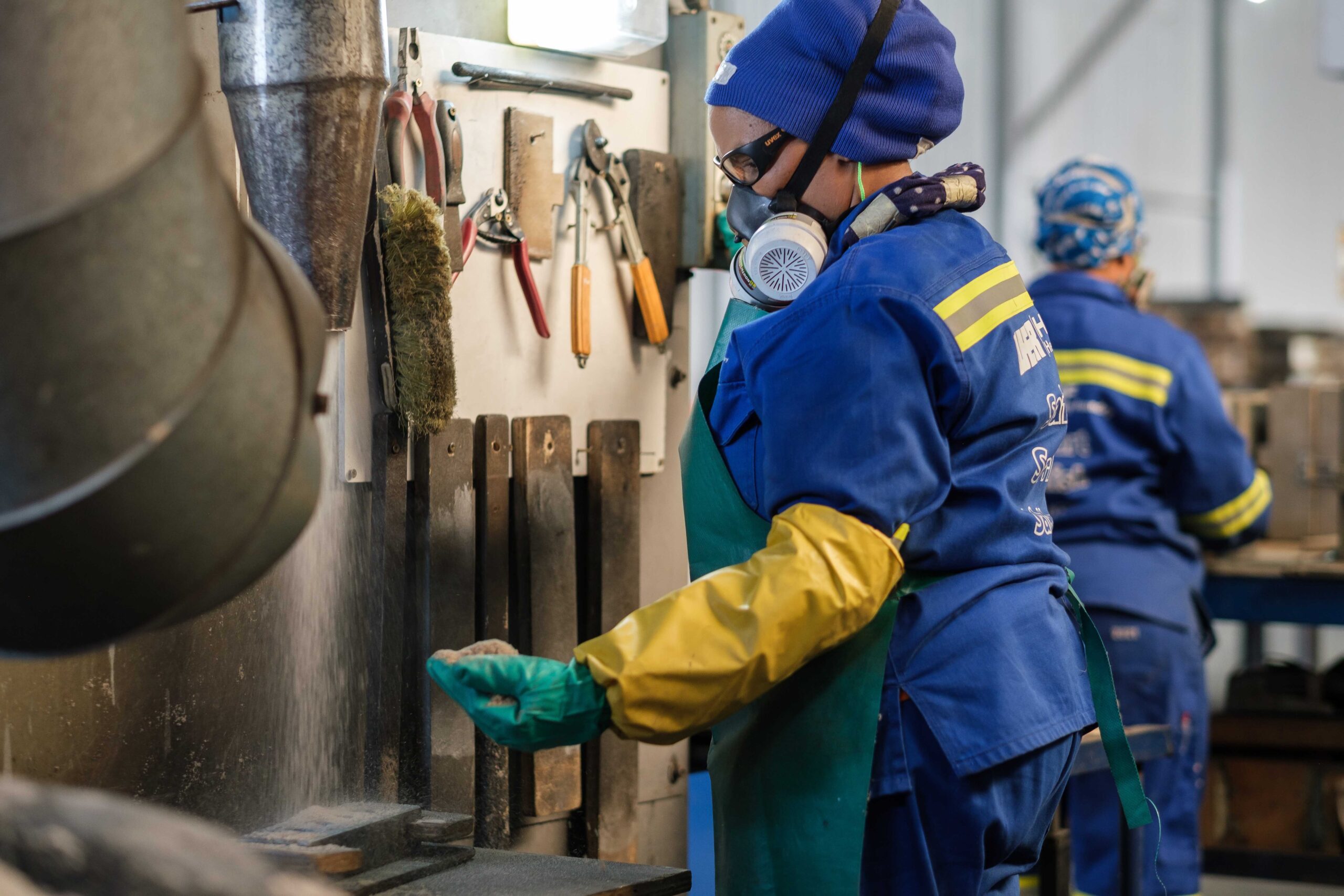
“The extension of the foundry’s casting pit has created additional space for casting-cooling, enabling higher production throughput,” De Jager explains. “At the same time, the melt shop is being upgraded with advanced technologies to support faster more efficient melting cycles and reduce material transport times, while the new pattern development systems give us the flexibility to serve a wider range of global markets.”
He adds that alongside operational growth, sustainability remains a key focus. “As we expand our capacity, we are also improving our environmental performance,” he says. “We are sourcing renewable power from regional solar and wind farms, wheeled through the Eskom grid and the Nelson Mandela Bay network.”
By mid-2026, one-third of Weir HBF’s total annual electricity consumption will be derived from renewable sources, with a target of 80% within the next five years. The facility is also advancing its circular economy initiatives by reclaiming and re-melting worn components from customers, significantly reducing waste and resource use.
“The expansion also carries strong human-capital benefits,” De Jager continues. “It is creating new local employment opportunities, developing critical technical skills and reinforcing the regional supply chain.”
He adds that Weir HBF collaborates closely with the Nelson Mandela Bay Business Chamber to identify skilled tradespeople and participate in training and development programmes that uplift the local workforce.
