
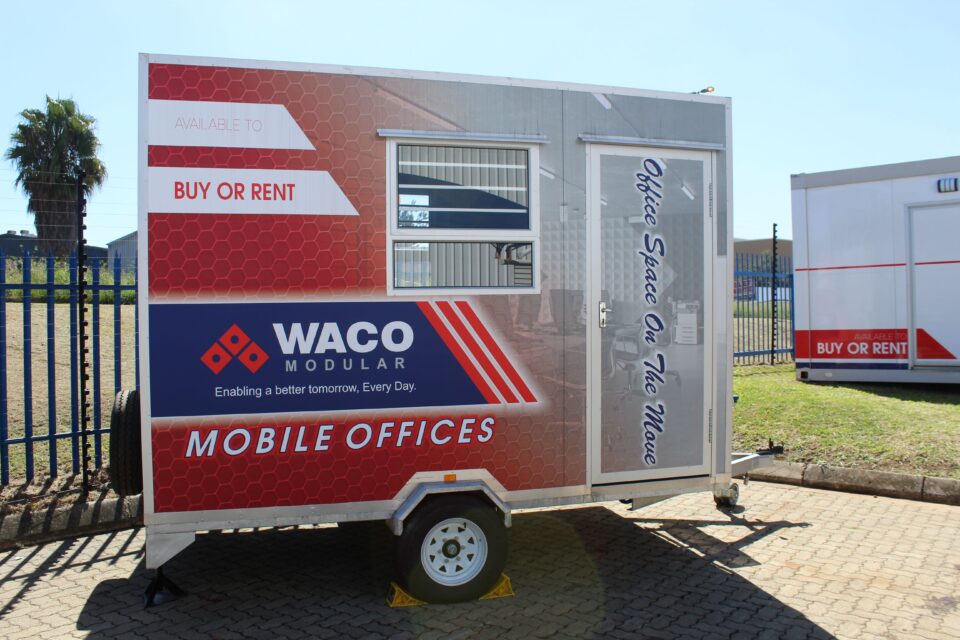
As South African industries face tightening economic conditions, infrastructure backlogs and rising project costs, businesses are increasingly turning to mobile, modular trailer solutions to improve agility and reduce capital strain. From mining and construction to events and sanitation services, demand is growing for infrastructure that can move as fast as project environments evolve.
According to Gerhard Britz, Managing Director at Waco Modular, this shift reflects a fundamental change in how organisations think about infrastructure.
“Businesses are under immense pressure to deliver more with less. Traditional fixed buildings are expensive, slow to deploy and often impractical for multi‑site or remote operations. Mobile infrastructure gives companies the speed, flexibility and cost efficiency they need to stay competitive,” he explains.
The need for speed, mobility, and cost efficiency
Britz notes that three factors are driving the surge in mobile infrastructure adoption, namely: speed, cost pressure and operational mobility. Many sectors simply cannot wait months for the deployment of permanent infrastructure.
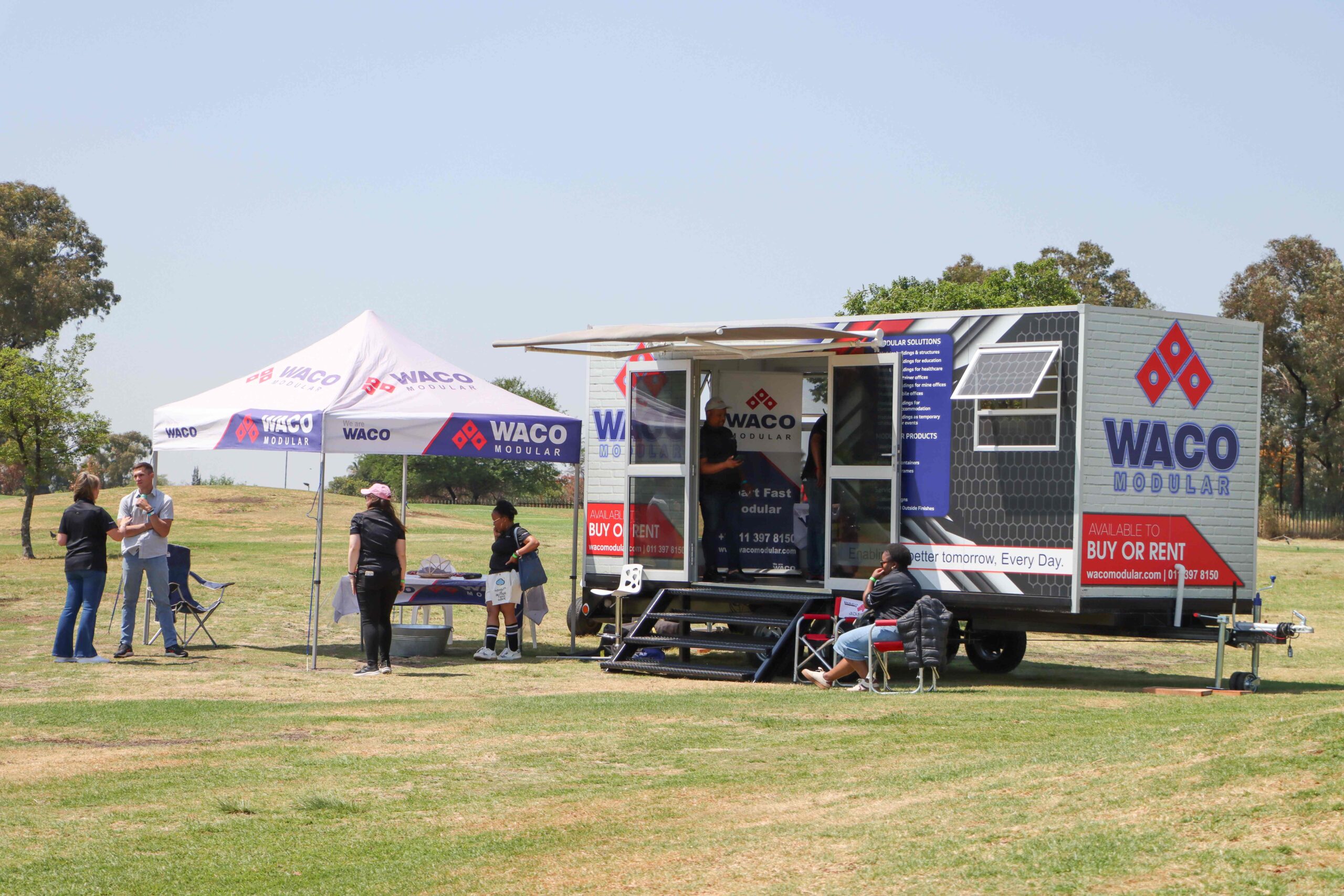
“They need compliant, fit‑for‑purpose spaces that can be deployed immediately and relocated as operations shift. Modular trailer solutions solve this problem by providing ‘space on the move’, or infrastructure that follows the customer’s operation, not the other way around,” he says.
Waco Modular’s modular trailer range was developed in direct response to this market need. Designed for rapid deployment and seamless relocation, the units offer the same professional standards as fixed modular buildings, but with the added advantage of mobility.
Supporting multi‑sector operational demands
Across many industries, trailer‑based modular solutions are being used to enhance service delivery and expand operational capability. In mining, mobile offices, supervisor stations, access control points, and ablution facilities allow teams to establish compliant support structures almost immediately, even in remote locations.
Construction firms rely on mobile offices, meeting rooms, and welfare units to support fast‑moving project schedules. In the events sector, trailers serve as ticketing booths, admin hubs, medical stations, and hospitality support units.

“Our customers operate in environments where conditions change daily. They need infrastructure that can keep up. Whether it is a national events calendar, multiple mining shafts, or sanitation contracts across dispersed farms, trailers allow businesses to move quickly and maintain service continuity,” says Britz.
Versatile range for diverse applications
Waco Modular’s trailer portfolio includes office trailers, ablution trailers, event trailers, and custom service trailers designed for specialised functions such as training, security, storage, and technical support.
“These are not generic units,” Britz emphasises. “Each format is designed around real operational needs. The goal is to give businesses access to high‑quality, mobile spaces that enhance their service offering and unlock new revenue opportunities.”
For service‑led businesses in particular, trailers have become revenue‑generating assets. By integrating mobile infrastructure into their offering, companies can move up the value chain, from providing a single service to delivering a fully, integrated solution.
“Mobility unlocks new revenue streams. A sanitation provider can expand from basic portable toilets to premium mobile ablution experiences, while a contractor can offer not just labour, but fully equipped mobile offices and welfare facilities. It strengthens customer retention and improves commercial outcomes,” Britz notes.
Trailers also reduce the barriers to expansion by eliminating the need for permanent infrastructure in new regions. This allows businesses to test markets, support short‑term contracts, or scale operations with significantly lower risk.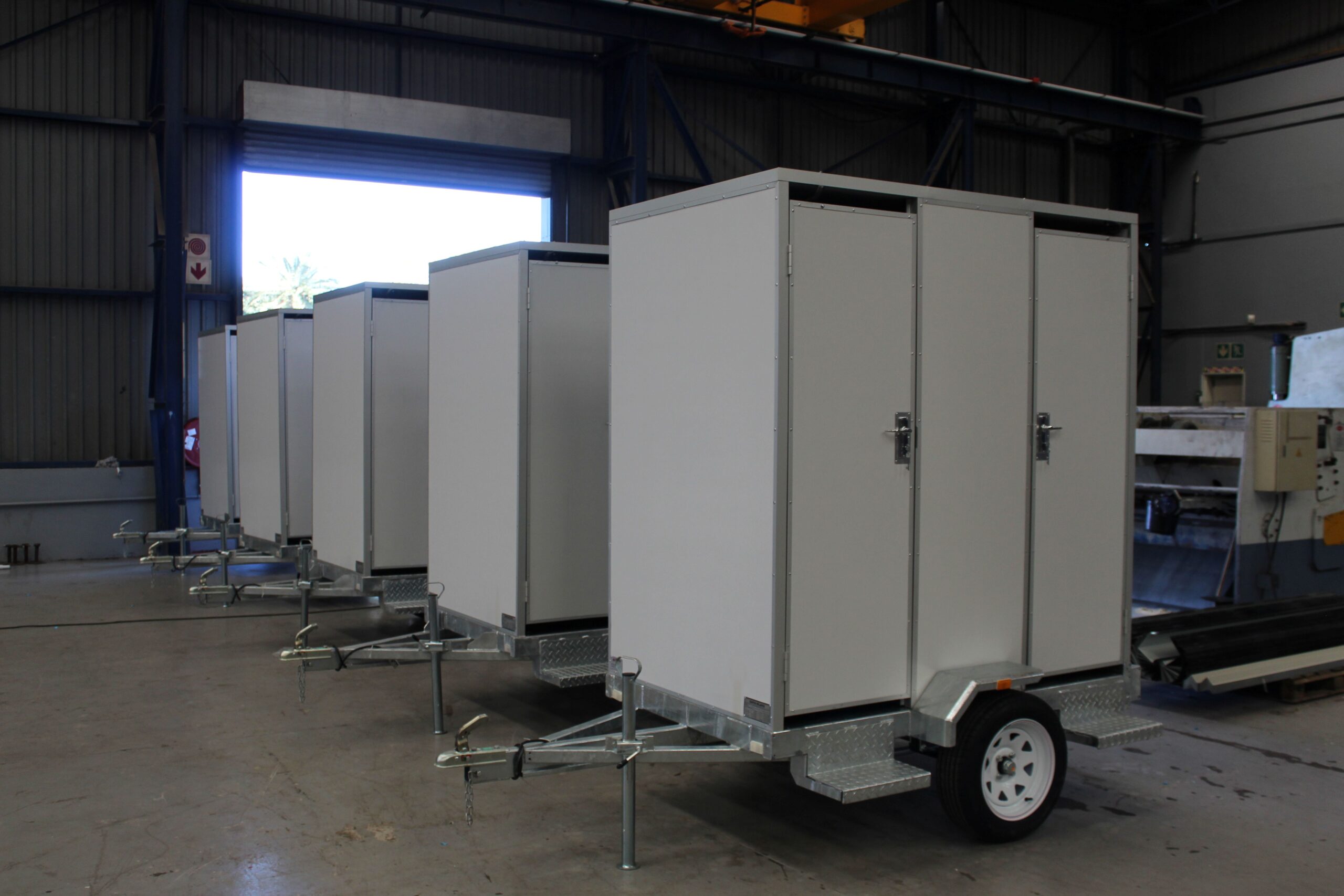
The flexibility of modular trailers also reduces barriers to expansion by removing the need for permanent infrastructure in new regions. This enables businesses to test markets, support short-term contracts or scale operations with lower capital risk and faster turnaround times.
Britz believes the trend towards flexible, mobile infrastructure will continue to accelerate. “Agility drives competitiveness, so the future belongs to businesses that can deploy infrastructure faster, adapt quickly, and align costs directly with revenue opportunities. That is exactly what modular trailers enable.”
