
During National Women’s Month in August, Associated Energy Services (AES) – the ‘go-to’ industrial steam operations and project company for manufacturers wishing to optimise thermal energy generation and efficiencies – celebrates the development and upskilling of pioneering, energetic women who are challenging stereotypes within the engineering and industrial spaces.
Whereas historically, boiler houses were the ambit of male employees, women are now playing increasingly important roles in both operations and maintenance, and AES therefore invests significantly in developing and upskilling women internally.
“Over the past two years, approximately 43% of new appointments within AES have been women, and around a quarter of skilled technical (24.4%) and professional roles (25.5%) are now held by women. Women bring a whole new set of skills and insights, playing increasingly important roles in both operations and maintenance – and adding value across the entire supply chain,” says AES Commercial Director Dennis Williams.
As a people-centric company, AES prioritises investment in people: employing the right person for the job and then training and developing steam boiler operations experts, elevating the quality of service to its clients.
“We not only encourage more women to obtain qualification and certification in the mechanical, technical or electrical sectors, but provide in-house development. As a result, more women have embarked on technical training in recent years,” Williams advises.
Climbing the operations ladder
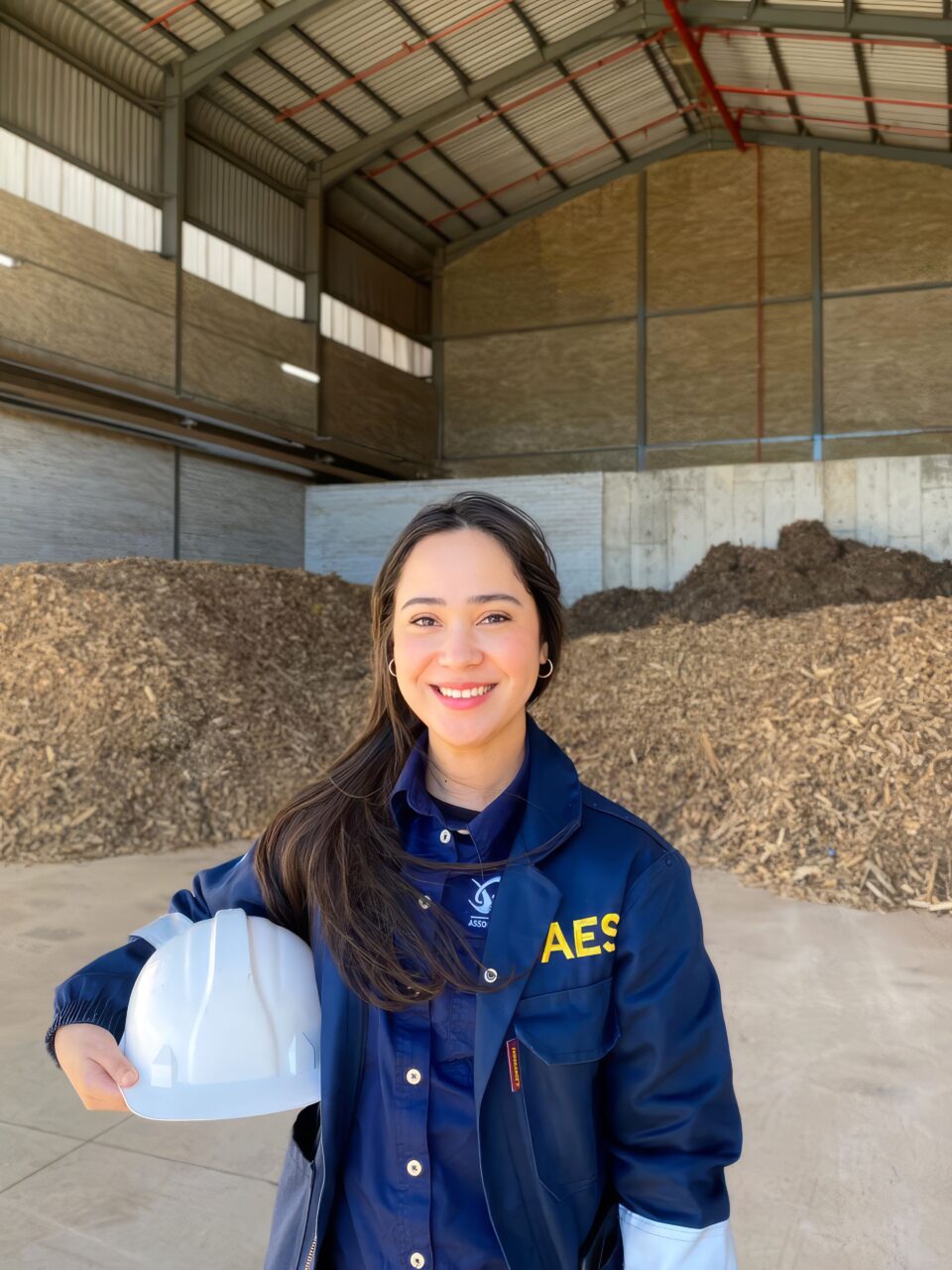
Kristen Rossiter, AES’s first female Operations Manager in the Western Cape, is responsible for 10 sites and 24-hour operational performance across a fleet of boilers. Her interest in engineering was sparked during childhood and, after graduating, she completed her in-service training at AES. This provided the perfect bridge between academic theory and the realities of operating and maintaining industrial processes powered by steam.
Looking back, Rossiter explains: “Steam plays such a critical role across diverse industries. Understanding and optimising a process – and then improving on its efficiency – remains one of the most rewarding aspects of engineering for me!”
Furthermore, Rossiter does not view operations in isolation: “Engineers must understand the financial implications of downtime, responsibility and risk. Decisions must balance technical excellence with production requirements, safety considerations, risk management and financial impact.”
Safety is a key example, she adds: “Academic studies teach regulations and principles, but working directly with steam boilers – high-pressure vessels – steam systems, confined spaces and hazardous materials gives a very different appreciation of the potential consequences of failure.”
Sustained improvement
Rossiter does not measure her achievements in individual projects, but rather by sustained improvements that lead to safer steam boiler operations, improved reliability, stronger team performance and better long-term outcomes for both its clients and for AES: “This is about continuous improvement. Sites that consistently meet efficiency targets, achieve zero downtime during a reporting period, or keep water chemistry within specification over an extended time are worth celebrating! Recognising these milestones with operators and team members reinforces positive behaviours, maintains motivation and creates a culture of accountability and pride.”
She traces this approach back to the experienced leaders with whom she has worked at AES: mentors who shared their knowledge, invested in her development and trusted her with increasing levels of responsibility.
“The most effective mentors are those who encourage problem-solving and allow young engineers to work through challenges. Allowing someone to investigate, troubleshoot and understand the root cause develops independent thinking and builds engineering judgement. When challenges arise, I go to site and investigate issues such as fluctuating pump pressure or boiler water levels.”
New trends and technology
During her career at AES, Rossiter has evolved as an engineer alongside technology such as data monitoring and analytical systems, especially AES’s own Remote Monitoring System (RMS).
“In the control room, our RMS is the central intelligence platform: collecting operational data, analysing performance and distributing insights to the wider team. I use the RMS daily to monitor client sites, access real-time operating information, support predictive maintenance activities and understand operational conditions,” she explains.
Rossiter adds that this enables her to effectively monitor key boiler parameters, analyse start-up trends and identify potential operational risks. For example, frequent rapid boiler start-ups can contribute to thermal stress and may eventually lead to cracking or tube failures.
One of the major areas of development within AES has been the transition to alternative fuels and more sustainable energy solutions. A significant example is a beverage client in the Western Cape which converted to the use of biomass under Rossiter’s watch.
Biomass introduces different challenges to using coal as a fuel source: “While offering important sustainability benefits, it also requires a different operational approach. Compared with coal, a greater volume of biomass may be required to achieve the same energy output because of differences in energy density,” she points out.
Spreading the word
Rossiter’s advice to young women considering engineering is not to allow (inaccurate) perceptions or stereotypes to discourage them from entering the profession: “Engineering requires attention to detail, analytical thinking and the ability to understand complex systems. These are qualities that women bring to industry. In engineering, overlooking a small detail can have significant consequences – which makes careful observation and attention to detail essential.
Women should also recognise that being adaptable, open to learning and willing to develop within an organisation are valuable qualities. Companies need people who can grow, learn and contribute positively. There is no reason for young women to fear engineering. The qualities they bring are exactly what industry needs!”
Ends
