
As engineers and workers navigate deep shafts and unstable geology when visibility remains limited, communications are fragile, and risks move faster than human response, the mining sector becomes one of the world’s most hazardous industries.
The urgency is visible in recent trends. According to the Mining Safety and Health Administration (MSHA), the first quarter of 2025 reported 10 miner fatalities, which was triple the number encountered at the same time in 2024. In such incidents, the problem was not unawareness, but the reaction time involved.
The next five years will belong to mines that eliminate that delay through edge-based intelligence.
From Data Delay to Real-Time Decision
Historically, mining safety data — whether derived from supervisor logs, sensors, or CCTV- has often been analysed after the fact. Alerts from remote servers, periodic inspections, and manual reviews by supervisors, by the time a risk is identified, it could already have manifested as a serious injury or fatality (SIF).
In contrast, when edge computing is deployed, it enables mining sites to process data locally on-site— eliminating latency that could otherwise cost lives.
The integrated AI models running on-site can analyse video feeds, sensor streams from gas leak detectors or ground vibration sensors, equipment telemetry, or vehicle proximity data within milliseconds. That shift means a potential hazard like a roof fall precursor, overloaded haul truck, or unauthorized entry into a dangerous zone can trigger immediate alerts, automated shutdowns, or evacuation signals without ever reaching the cloud.
When the Underground Footprint Loses Connectivity
Many mines operate miles underground, in confined spaces, or in remote open pits where network connectivity is unreliable. Relying on cloud-based systems in such moments of despair becomes impractical. Edge computing ensures that safety-critical processing stays on-site, independent of external connectivity, and processes without the need for electricity or internet.
For instance, in a narrow maintenance tunnel where workers are repairing conveyor belts, a sudden build-up of methane can create a life-threatening scenario. Edge AI processes data from the environmental sensors, detecting the gas concentration in real time, monitoring worker location, and triggering localized alarms or ventilation adjustments immediately, even if the mine has lost internet connectivity.
This ensures that even during connectivity outages due to bad weather, terrain, or infrastructure limitations, the mine’s “digital nervous system” remains active.
Across global mining operations, there is growing evidence of AI delivering safety and operational value. For example, several major mining companies like Rio Tinto, BHP, and Gold Fields are using AI for operating autonomous haulage fleets, predictive maintenance, and accident reduction.
AI Embedded in the Mine: A Vision for 2030
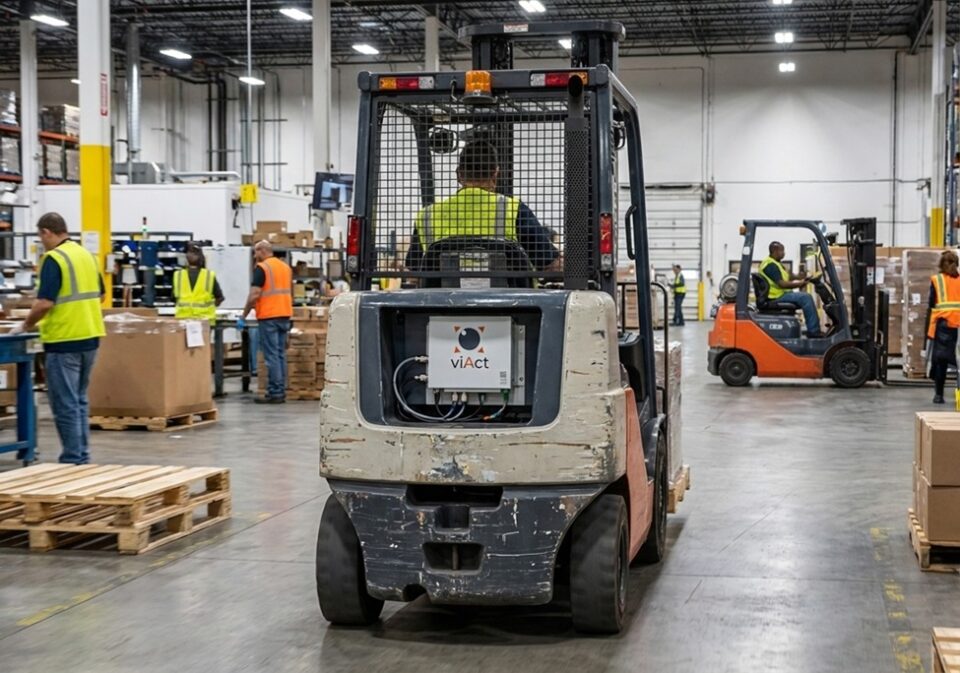
Imagine a mine in 2030 where every haul truck is equipped with onboard AI that monitors terrain vibration, brake and steering behaviors, load balance, blind-spot proximity to workers or static obstacles onsite.
AI cameras and LiDAR systems mounted across critical infrastructure continuously scan for roof instability, ground fissures, potential hazards, or unauthorized access into blast zones. IoT devices like smart watches and smart helmets track worker location and health vitals, instantly cross-referenced with vehicle and equipment data.
All this data is processed locally on-prem, in micro-edge data nodes dispersed across the site — enabling detection and action within seconds.
A fatigued haul-truck driver starting a load shift can be identified easily and contained early, while conveyors showing irregular load patterns could halt before overload failure.
“Edge AI will become the silent guardian of every mine,” says Gary Ng, CEO of viAct. “The ability to interpret machine, environmental, and human data directly at the point of activity shortens critical response times. This marks a transition from incident-driven interventions to data-driven prevention.”
Why the Next Five Years Matter
As global demand for minerals rises — driven by energy transitions, infrastructure, and emerging technologies — mines will need to expand deeper and operate longer. Complexity will increase, and so will risk exposure. Waiting for cloud analytics or human supervisors is no longer acceptable.
Those that embrace edge-AI early will not only safeguard workers but establish a competitive advantage — fewer stoppages, lower downtime, improved compliance, and a stronger reputation in a safety-conscious global market.
